
Seal Kit Labels: Do Not Turn a Use-Before Date into a Cure-Date Claim
Resolve unavailable component cure-date evidence before approving seal-kit labels or substituting a differently named date statement.
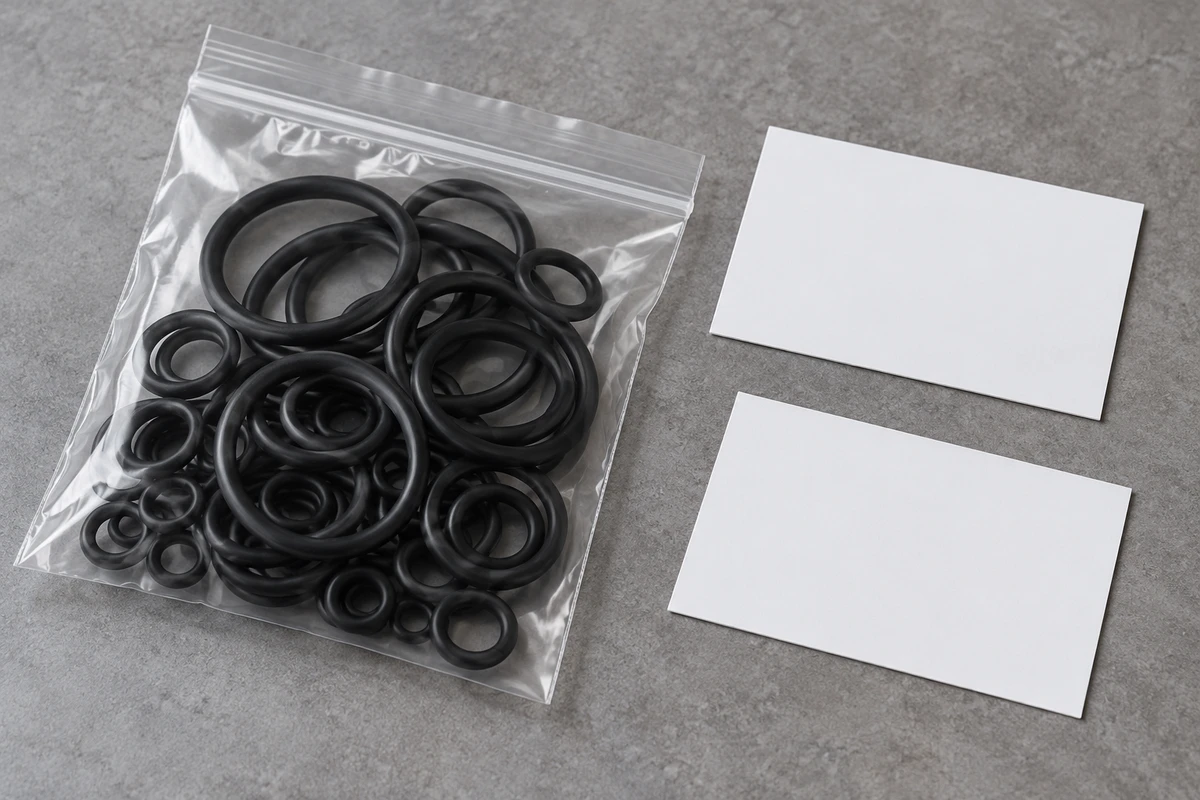
A seal-kit label cannot supply component cure-date evidence merely by displaying a date. Before approving label artwork, establish what the requested date means, who can substantiate it and whether that evidence exists for the proposed supply. A different stock-management date may be useful without answering the cure-date requirement.
This is a decision about the promised documentary deliverable. It does not calculate expiry, assess seal condition or determine whether a kit is suitable for use.
Define the field that the purchase requires
Keep the exact wording of the customer's date requirement. Component cure date, kit packing date and a stock-management use-before entry describe different facts. Ask the requirement owner which fact must accompany the purchase and what evidence is expected to support it.
If a template simply says date, resolve the ambiguity before sending it to a label printer. A clear heading prevents a convenient available date from acquiring a meaning its originator never supported. It also gives the supplier a precise documentation question to answer.
Link the requirement to the exact kit and provider. Do not assume every component has an individual traceability record merely because the kit has a product number or order reference.
Use the provider statement as an evidence limit
Maximator Maximum Pressure Ltd's UK support page says Maximator seal kits do not show component cure dates and explains that seal traceability is not maintained. The page discusses customers applying use-before dates for stock management. It does not establish a factory-applied use-before label on the kit. Maximator UK cure-date statement
This undated public statement was rechecked for this draft. Confirm its applicability to the actual proposed supply. It is a bounded provider example, not a finding that all seal manufacturers lack traceability or that a particular purchased kit has expired. Storage periods and date calculations are outside this article.
Where the supplier confirms the requested evidence is unavailable, record that answer accurately. An unavailable component record is not an invitation for a coordinator to infer a cure date from an invoice, receipt or packing entry.
Keep alternative dates under their own names
A packing date can describe an identified packing event if its issuer supports it. A customer-applied use-before entry belongs to the customer's stock-management decision. Neither becomes a component cure date through a change of heading.
Record the originator and meaning of any proposed alternative statement. If its basis or authority is unclear, leave that field unresolved. Do not copy the same date into several headings merely to fill a label template; that would create several factual assertions from one unsupported assumption.
The responsible requirement owner can consider a differently named deliverable, but the decision must expressly change the evidence requirement. A packer or purchasing intermediary should not treat accurate printing as authority to make that change.
Resolve the documentary choice before artwork approval
There are several possible purchasing outcomes. The buyer may retain the cure-date requirement and seek a documented alternative offer. The responsible owner may accept a separately defined documentary deliverable. Or the current offer may remain unresolved because it cannot meet the requirement. No outcome guarantees that suitable alternative supply exists.
| Evidence field | Record to keep |
|---|---|
| Kit and provider | Exact proposed item and accountable response source |
| Required date | Named fact and requirement reference |
| Evidence availability | Available, unavailable or not yet confirmed |
| Proposed alternative | Exact wording and what it actually represents |
| Originator | Party issuing the statement and its supported scope |
| Requirement decision | Authorized revision or unresolved condition |
| Artwork issue | Label file reflecting only the accepted truthful wording |
This original worksheet addresses the meaning of the proposed label. Comparing a printed label with an approved file comes later and cannot correct an unsupported statement embedded in that file.
A fictional label-template conflict
Imagine a buyer template that requires component cure date. The proposed provider confirms that the record is unavailable. The buyer also has a separate stock-management use-before entry, and a packer suggests copying it into the cure-date box. This is an invented example, not a report about a Maximator order or factory label.
Keep the cure-date field unresolved. Ask the requirement owner whether a differently named statement would meet the purchase need or whether documented alternative supply must be sought. If a revision is authorized, retain the changed requirement and identify the alternative date's originator. If no revision is authorized, a completed-looking label cannot close the original condition.
Suppose the artwork is printed exactly as approved but uses the wrong date heading. Print fidelity does not make the heading true. Return the factual question to its owner and preserve the discrepancy; do not improvise physical relabeling or assign an expiry status.
Hand over an honest documentation record
Keep the provider response, evidence-availability decision, approved wording and outstanding exceptions together. A later buyer should be able to see why the label contains a particular statement and which requested evidence it does not provide.
Use seals and gaskets for product context and the spare-parts inquiry to describe the missing evidence. Our role is independent aftermarket and unbranded buying coordination and supplier negotiation. The named provider is a documentary example, not an affiliation, a branded-supply offer or a promise that we can certify seal dates.
The initial inquiry supports an eligible marketplace HTTPS link, an 8–1200-character description or screenshots. It accepts up to five PNG, JPEG, WebP or GIF images, at most 10 MiB each and 20 MiB total. PDF, CAD and ZIP files need a separately agreed authorized exchange; the image field is not a technical-file portal.
Does a use-before date establish a seal’s cure date?
No. A stock-management use-before entry and a component cure date represent different facts. Preserve the originator and meaning of each statement, and keep the cure-date requirement unresolved if the necessary evidence is unavailable.
Can a kit packing date fill an unavailable cure-date field?
A packing date only answers its supported packing-event meaning. It cannot be relabeled as a component cure date. Ask the requirement owner whether an accurately named alternative deliverable is acceptable, retaining any explicit change to the purchase requirement.
Does missing cure traceability prove expiry?
No. Missing documentation is an evidence limit, not a condition or expiry finding. This review neither calculates storage life nor determines whether the kit is usable; those questions require their own responsible technical assessment.
Who may approve a different date-evidence deliverable?
The responsible owner of the evidence requirement must decide the proposed change. The supplier identifies what it can substantiate, while the packer reproduces accepted truthful wording. Neither printing capability nor a purchasing coordinator’s convenience substitutes for that decision.
Sources
Discuss a sourcing request related to this article.Seal Kit Labels: Do Not Turn a Use-Before Date into a Cure-Date Claim