
Custom ring reorders: reconcile supplier stock before a new release
Separate a supplier-held quantity, an open release and received rings so one requirement does not generate two purchases.
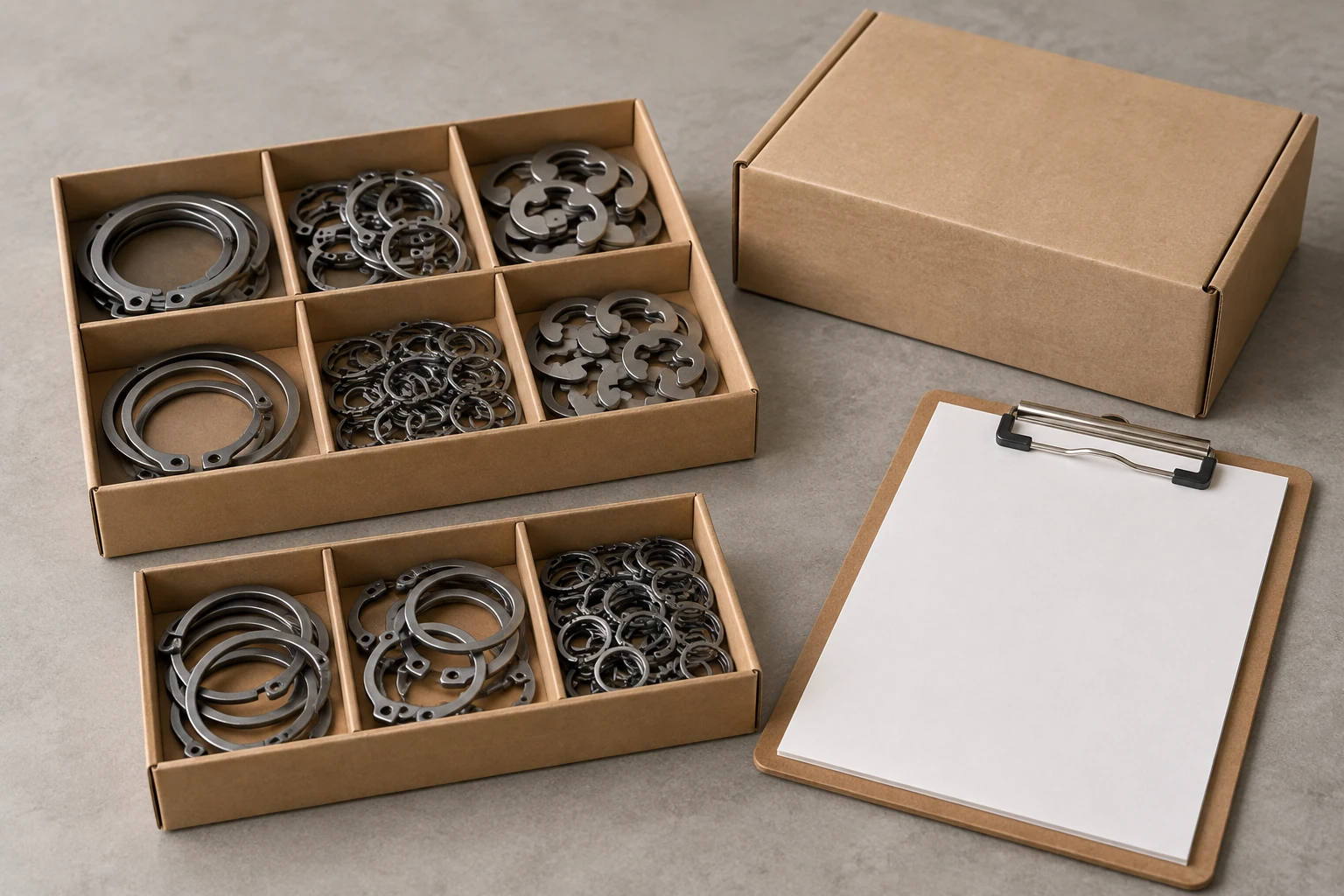
A replenishment request for an approved custom ring should start with the stock already committed to that requirement, including any quantity held by the supplier. The same rings can appear on a supplier balance, an open release and an expected-receipt report. Adding those reports together can make the available quantity look larger than it is; ignoring the open release can trigger a second purchase.
The part specification is already settled here. The task is to reconcile quantities and transaction references, not to change a drawing or promise a just-in-time service.
Establish whether a stocking arrangement actually exists
Smalley's custom-parts page describes an option to hold rings or springs for a customer's next purchase order or blanket-order release. That is a named manufacturer's described service, not proof that a particular seller has reserved the buyer's part. Smalley custom parts
Ask the actual seller to identify the accepted arrangement, approved ring reference, stock-report date and quantity covered. A quotation for future manufacture is different from a report of existing goods. The seller should also explain whether its displayed balance includes quantities already allocated to a release.
Do not infer ownership, cancellation rights, payment timing or delivery speed from the word stock. Record the applicable commercial arrangement separately. A purchase-history screen is useful for finding the reference; it is not the supplier's current inventory statement.
Follow one population through the release
Give each call-off its own reference linked to the parent arrangement. Keep requested, acknowledged, dispatched and received quantities visible. These are stages in one transaction, not four independent pools of rings.
Reconcile the supplier's report to the buyer's open-order record before treating either as the remaining balance. If the supplier deducts rings at allocation but the buyer expects a deduction at dispatch, the reports can differ without any missing physical goods. Ask what event each figure represents rather than immediately issuing an order to cover the apparent difference.
A cancelled or changed release needs an acknowledgement too. A buyer's internal cancellation does not establish that the supplier has returned the rings to the available pool. Keep the unresolved quantity visible until both records describe the same outcome.
Fictional example: the forty rings counted twice
Assume a fictional approved ring arrangement with 100 rings reported at the supplier. A call-off for 40 has been acknowledged but not received. The supplier confirms that the 100 includes those allocated 40. There are therefore 60 not yet allocated there, plus 40 on the open call-off; the record does not contain 140 rings.
Suppose the buyer needs 50 rings for an identified requirement and has none locally. If the existing 40-ring call-off is confirmed for that requirement and its needed date, the uncovered demand is 10. If its timing is unresolved, report the 40 as conditional coverage rather than declaring the requirement covered. No dispatch or arrival interval is assumed in this example.
The buyer can request an additional release against the confirmed balance where the arrangement permits. A fresh manufacturing purchase is a different decision and should not be raised merely because the first call-off has not arrived.
Close the reconciliation with an actionable balance
| Record | Required distinction |
|---|---|
| Approved ring | Exact reference and governing arrangement |
| Supplier report | Date and whether allocated quantities are included |
| Open call-off | Unique reference and acknowledged quantity |
| Physical progress | Dispatched and received events for that same call-off |
| Demand coverage | Requirement, date and unresolved conditions |
| Next action | Additional release, new manufacture or clarification |
Retain the reconciled statement with the next purchasing instruction. A larger forecast may justify a separate discussion about future stock; it should not silently replace the confirmed balance used for the present release.
Prepare the purchasing enquiry
For a purchasing enquiry, use CNC machining and Spare-parts sourcing. Provide the approved reference and the reconciled requirement. These enquiry routes do not establish manufacturer affiliation, branded-product availability or authorization to perform technical service.
Frequently asked questions
Does supplier-held stock automatically belong to the buyer?
No ownership conclusion follows from the stocking description. Keep the actual agreement and ask the seller to clarify the commercial basis separately from quantity and location.
Should I add the open release to the supplier balance?
First ask whether that balance already includes the allocated release. Count the physical ring population once and use transaction stages to explain where it sits.
Can an unreceived release reduce a new order?
It can provide conditional coverage when its identity, allocation and needed-date basis are confirmed. Preserve uncertainty rather than treating any acknowledgement as guaranteed arrival.
Does cancelling a call-off restore its quantity immediately?
Not on the strength of an internal note alone. Obtain the supplier acknowledgement and reconcile whether the goods remain allocated, have shipped or are available again.
Sources
Discuss a sourcing request related to this article.Custom ring reorders: reconcile supplier stock before a new release