
Rotary-union RFQ: map the duty of every passage
Give each rotary-union passage its own medium, duty reference and connection identity before comparing a multi-channel replacement.
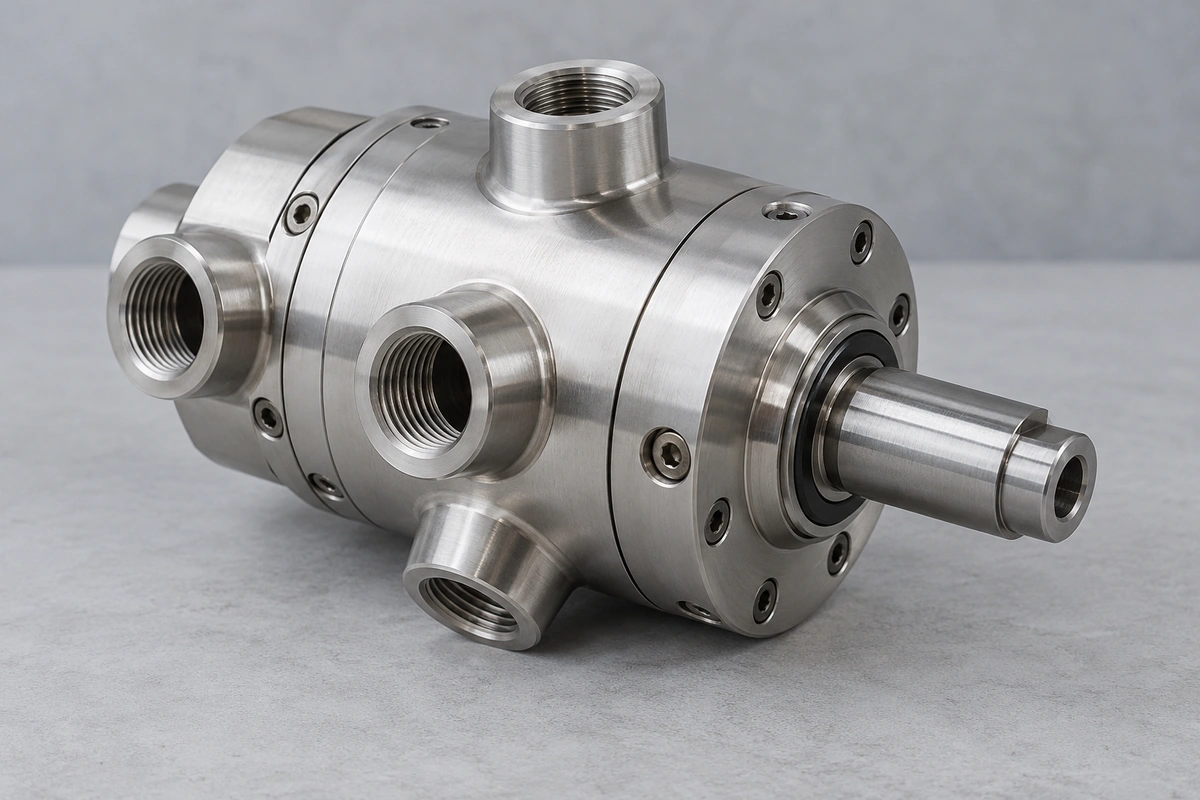
“Four-passage rotary union” tells a buyer how many passages a listing claims, but not what each passage is intended to carry. A replacement inquiry needs a channel-by-channel map that links the approved machine requirement to the exact proposed union.
The decision is whether every documented channel duty has an explicit, reviewable response. Channel count, connection appearance and a family-level pressure headline cannot substitute for that map.
Use product families as context, not a combined rating
Deublin's rotary-union overview separates application groups including air, coolant, oils and water, and lists multiple-media products. It establishes that media and channel configurations are application-dependent. It does not establish a simultaneous duty envelope for an unnamed multi-passage model. Deublin rotary unions
Do not collect the highest pressure, temperature and speed values from different family pages and combine them into a supposed product capability. Ask for the exact model documentation and the manufacturer's assessment of the specified operating combination.
Keep electrical circuits outside the fluid-passage count. If the proposed unit includes an electrical transfer assembly, identify that as a separate interface and scope requiring its own electrical documentation.
Assign a stable identity to each channel
Use the approved machine or union drawing to name the passages. Retain the existing channel references consistently across the inquiry, proposed drawing and supplier response. Avoid informal labels such as “first hole” when their meaning depends on which end a person is viewing.
For each passage, identify the required medium using the actual service record. Include the documented duty conditions and any information the responsible reviewer says is needed. Mark unavailable conditions as unknown instead of inserting the catalogue maximum or assuming all passages share the same duty.
Where the drawing distinguishes a supply and return or otherwise links channels, preserve those relationships as documented. Do not create a new fluid circuit in the RFQ. The buyer's map records the approved arrangement; it does not instruct anyone to reconnect equipment.
Require the supplier to return a mapping
Ask the supplier to match each required channel to a specific proposed channel and connection on its drawing. If the connection numbering differs, request a cross-reference rather than renaming the original requirement. The technical reviewer should be able to follow the same channel from machine record to proposed product without interpreting a photograph.
The response must also identify which duty requirements are supported for that exact variant and what remains unresolved. A generic “air and oil compatible” statement may not answer every medium or condition in the supplied application brief.
Treat unused or spare passages explicitly. A passage not used in the present machine does not automatically authorize a future duty, and this article provides no instruction for closing or modifying it. Ask the manufacturer and system owner how the exact proposed configuration is documented.
A fictional channel-count match
An existing approved arrangement has separately documented channels for two media and a return function. Offer A has the same total passage count but provides only a general product-family description. Offer B supplies a channel drawing, yet its proposed numbering leaves one required service unmapped.
Ask A for model-specific passage documentation. Ask B to complete the cross-reference and identify the missing service response. Neither is ready for an unqualified replacement decision. This example contains no actual channel arrangement, pressure setting or recommended fluid combination.
Use a passage-duty worksheet
| Record field | What the buyer should preserve |
|---|---|
| Channel identity | Stable passage reference from the approved drawing; one row per channel |
| Required medium | Documented medium for that channel, with missing composition information flagged |
| Duty record | Approved conditions and operating combination, not substituted family maxima |
| Connection drawing | Existing reference and exact proposed port identity and drawing revision |
| Proposed channel mapping | Supplier cross-reference, supported duties and unresolved channel gaps |
| Review owner | Responsible system specialist and model-specific acceptance reference |
Repeat the channel fields for every passage rather than compressing several into “same.” Keep the whole-unit model, revision and assembly scope above the map so the evidence cannot drift between variants during price negotiation.
Ask for a complete mapped response
“Please identify the exact rotary-union variant and map every required passage to your connection drawing. Respond to the documented medium and duty for each channel, state any simultaneous-operation limitations or unanswered inputs, and list all deviations. Keep integrated electrical scope separate.”
The machined-parts category and spare-parts inquiry provide the sourcing route. Application qualification, installation and fluid-system acceptance belong to the responsible specialists. A complete channel map supports their review without claiming it has already passed.
The inquiry image field accepts up to five PNG, JPEG, WebP or GIF files, no more than 10 MiB each and 20 MiB combined. A supported marketplace link, a short description or screenshots can start the request. It is not a PDF, CAD or ZIP upload field; arrange other technical files through a separately agreed, authorized exchange.
Does the same passage count make a rotary union a replacement?
No. Every passage still needs a documented medium, duty and connection mapping for the exact proposed model.
Can I combine the highest ratings from several family pages?
No. Request the applicable conditions and simultaneous-duty assessment for the actual variant rather than constructing a combined rating.
Should electrical circuits be counted as fluid passages?
No. Keep electrical transfer requirements and any integrated slip-ring scope separate from the fluid-channel map.
What if one passage has no confirmed duty record?
Leave it unresolved and ask the responsible system owner for the missing requirement. Do not assume it duplicates another channel or is free for any future use.
Sources
Discuss a sourcing request related to this article.Rotary-union RFQ: map the duty of every passage