
Bearing-strip reorders: total length can hide a usable-piece shortage
Compare each identified remnant with an approved material-consumption ticket instead of treating separate short lengths as one continuous supply.
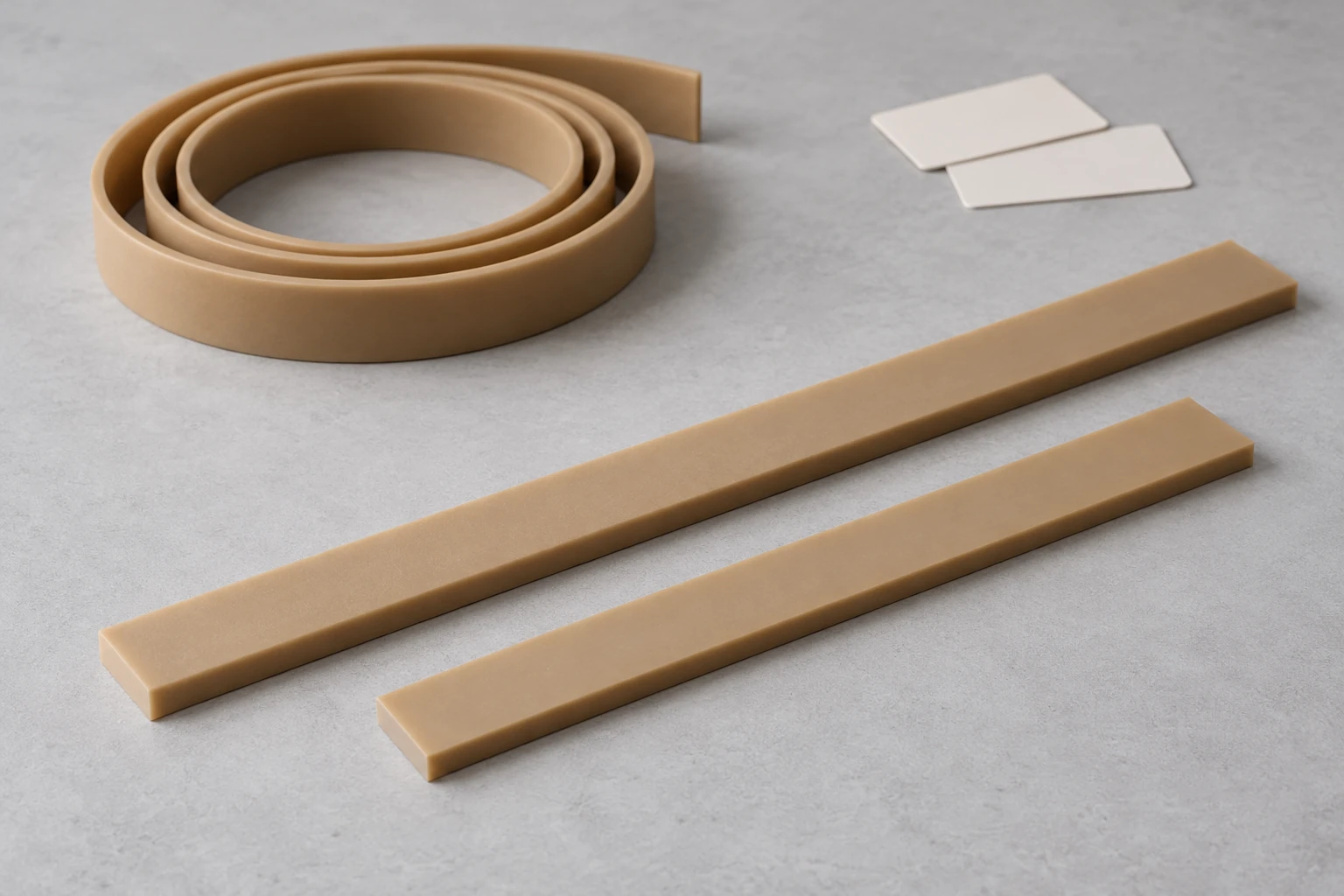
A stock report showing enough total bearing-strip length can still leave an approved job uncovered. Separate remnants do not become one continuous piece when their lengths are added in a spreadsheet. Before reordering, match each identified stock piece to the material consumption already authorized for the job.
The technical owner or authorized processor must supply that consumption basis, including any needed allowances. This article does not calculate a finished bearing length, installed gap, cutting method or acceptable joint.
Retain the actual supply form
Hallite's housing data describes type 506 supplied in spiral lengths, individual cut bearings and flat-packed lengths. This is evidence that the commercial forms differ, not permission to exchange them for every application. Hallite bearing-strip supply information
An accepted stock length should keep its product identity, section, material and applicable records after part of it is issued. Record each remaining continuous piece separately. A remnant with unidentified material is not eligible simply because its length suits a ticket.
Keep already prepared bearings outside the raw-strip balance unless an authorized record specifically establishes another treatment. Their quantity is a finished-piece count, not automatically recoverable metres for another job.
Use a released consumption ticket
Ask the authorized processor for the stock consumption required by each job or approved group. The ticket should identify the applicable stock specification and whether its stated length already includes processing allowances. If that basis is missing, leave the allocation unresolved rather than adding an invented percentage.
The buyer can then compare required consumption with documented eligible pieces. A piece allocated to one ticket is no longer free for another simultaneous job. If a proposed allocation depends on combining separate remnants, send that proposal back for review; the inventory calculation itself cannot authorize joining.
Do not present an arithmetically possible allocation as proof that a processor can produce the finished items. Preserve the processor's acceptance and actual available length alongside the plan.
Fictional example: 900 millimetres is not a 600-millimetre piece
Assume two accepted remnants of the same approved stock, one with 500 mm of usable continuous length and one with 400 mm. An authorized consumption ticket calls for one continuous 600 mm allocation, with its process allowances already included. The total inventory is 900 mm, but neither piece covers that ticket. The 300 mm difference between total stock and demand does not establish a surplus usable for this job.
Now assume a separate approved ticket needs 350 mm from one continuous piece. Subject to the processor's confirmation, the 400 mm remnant can cover that ticket and leave 50 mm recorded under the same identity. The 600 mm ticket remains uncovered. The buyer should not reserve the same 400 mm again against another requirement.
All lengths here are fictional accounting inputs, not bearing dimensions or cutting advice. A later change in the processor's consumption basis requires a new allocation review.
Carry the piece record into replenishment
| Entry | Required record |
|---|---|
| Stock identity | Accepted type, material, section and traceable reference |
| Continuous piece | Individually identified usable length |
| Consumption ticket | Approved stock requirement including stated allowances |
| Allocation | One piece assigned to a specific ticket |
| Remaining material | New measured or otherwise authorized balance and identity |
| Purchase gap | Uncovered ticket rather than a negative aggregate length |
Ask the supplier for the approved form that can cover the unresolved requirement. Buying another large length may be appropriate, but its price must be considered alongside the planned use of the remaining material; no automatic saving or waste percentage is established here.
Prepare the purchasing enquiry
For a purchasing enquiry, use Seals and gaskets and Spare-parts sourcing. Provide the approved reference and the reconciled requirement. These enquiry routes do not establish manufacturer affiliation, branded-product availability or authorization to perform technical service.
Frequently asked questions
Can I add all remnants together to cover one job?
You can report their aggregate length, but a ticket requiring one continuous piece must be matched to an eligible continuous piece. Adding separate lengths does not authorize joining.
Who decides how much strip a bearing needs?
The responsible technical owner or authorized processor supplies the released consumption basis. Purchasing should not derive it from diameter or copy an unrelated catalogue dimension.
Can finished cut bearings be counted as spare raw strip?
Not automatically. Keep finished-piece inventory separate unless an authorized record establishes a different treatment for the actual material.
Should I add a standard cutting allowance?
Use the approved ticket and clarify whether its quantity already includes allowances. No universal allowance or processing method is supplied by this article.
Sources
Discuss a sourcing request related to this article.Bearing-strip reorders: total length can hide a usable-piece shortage