The elastomer named, not "rubber"
NBR, FKM, EPDM, silicone and PTFE suit different fluids and temperatures. We get the compound named and matched to what the seal actually sits in.
What we can help you buy on 1688
Last updated
A seal is defined by three things: the compound, the hardness, and the dimensions. Listings usually give the third and call the first "rubber".
That matters because NBR, FKM, EPDM and silicone fail in completely different conditions, and a seal in the wrong compound fails quickly rather than immediately.
Request a quote for seals and gaskets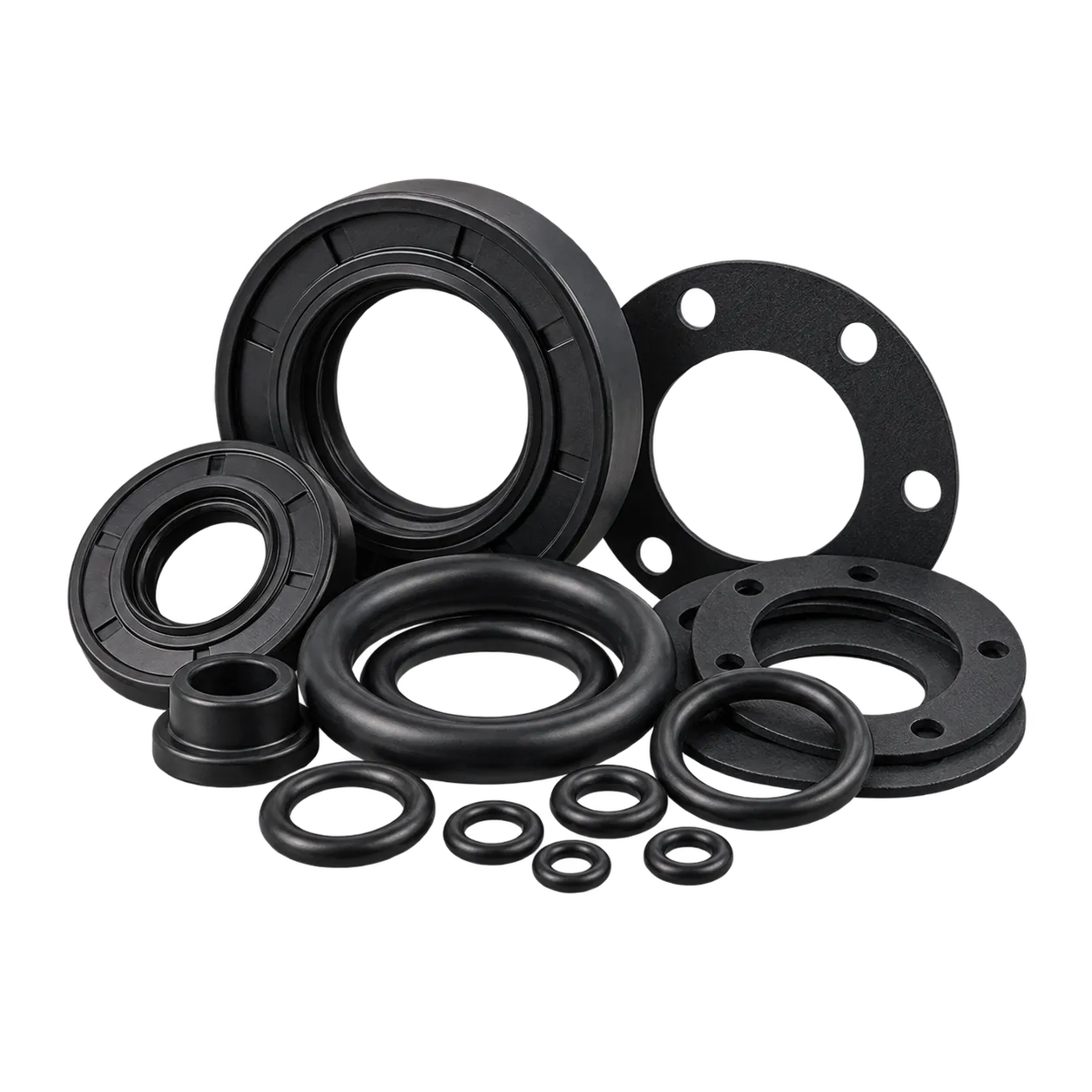
NBR, FKM, EPDM, silicone and PTFE suit different fluids and temperatures. We get the compound named and matched to what the seal actually sits in.
Hardness decides whether a seal extrudes under pressure or fails to seal at all. It is a number the factory has and rarely publishes.
A compound rated for the temperature but not for the fluid degrades quietly. Both need checking against the application, not just one.
A seal that has been in service is swollen or compressed. We work from the housing dimensions where possible, and adjust for wear when only the old part is available.
An O-ring is inside diameter and cross-section. Getting the cross-section wrong by half a millimetre produces a part that fits the groove and does not seal.
Parting line flash, voids and under-cure are what separate a cheap seal from a working one. All three are visible under inspection.