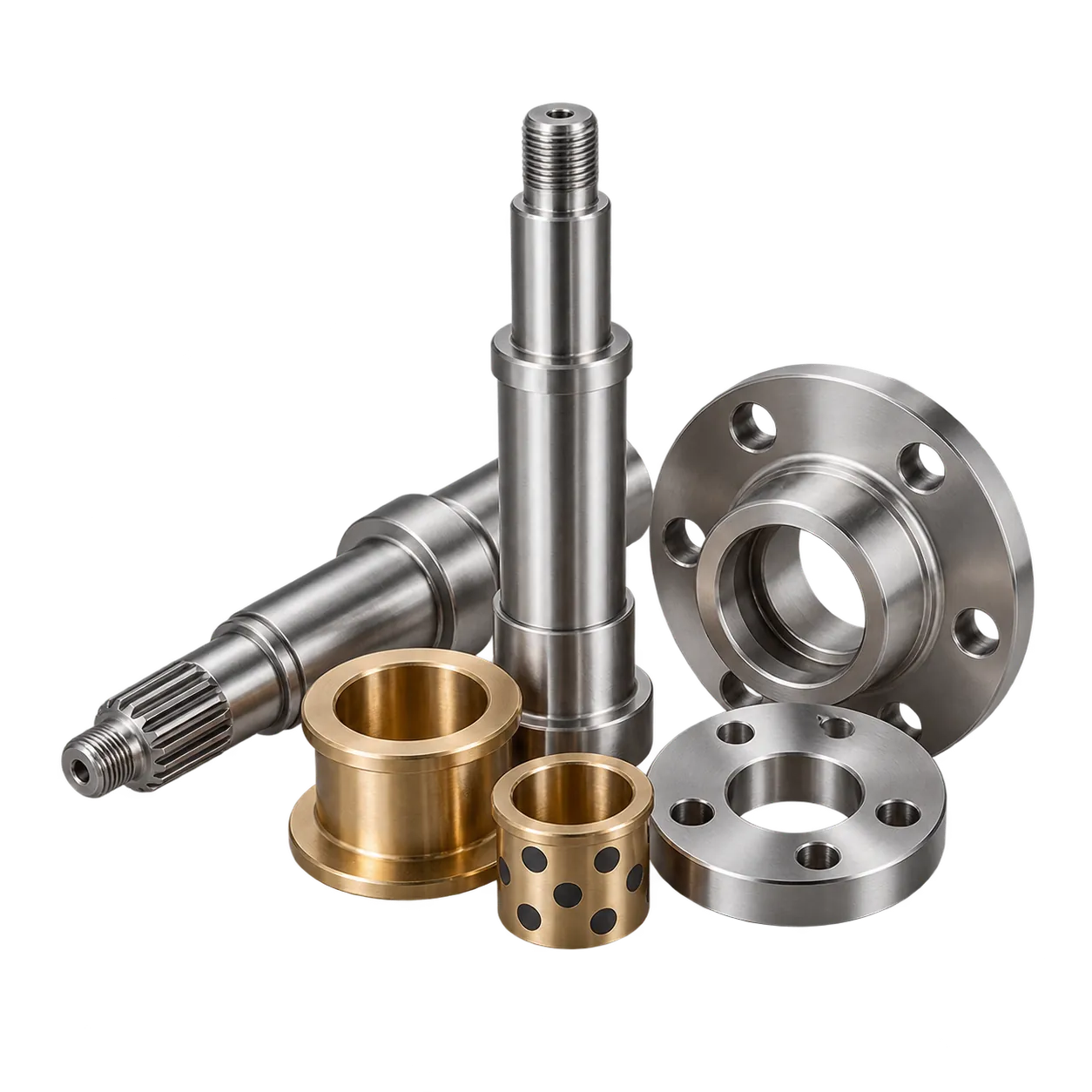
industrial, machinery and appliance spare parts / Buying guide
Reverse engineering from a sample
Last updated
Reverse engineering a mechanical part is a defined process with four stages, and its cost is dominated by the first one: deciding which dimensions actually matter.
A part measured everywhere to a tight tolerance is a part nobody will quote cheaply. A part where three dimensions are critical and the rest are free is a part any competent shop will make.
In this guide
The four stages
- Measurement — calipers and micrometers for most work, a CMM or 3D scan for complex geometry or where a surface profile matters.
- Material identification — spectrometry where it matters, hardness testing, or inference from the application when the budget does not justify testing.
- Drawing production — a dimensioned drawing with tolerances and a material callout. This is the deliverable a shop quotes against.
- First article — one piece made and measured against the drawing before the rest of the run.
Deciding what is critical
On most parts, three to six dimensions carry the function: bore and shaft fits, sealing faces, mounting hole positions, and anything that sets a running clearance. Everything else can be held to a general tolerance and cost almost nothing.
If you do not make that call, the shop will — either by tightening everything, which is expensive, or by loosening everything, which produces a part that looks right and does not work.
Material, and how to avoid guessing wrong
Spectrometry on a sample settles an alloy question for a modest fee and is worth it on anything structural or heat-treated. For a bracket, inference from the application is fine.
Hardness is where reverse-engineered parts most often fall short: the geometry copies easily and the heat treatment does not. If the original was hardened, specify the process and the target hardness, and ask for the test result with the first article.
Cost, roughly
- Measurement and drawing from a simple sample: a few hundred renminbi, often absorbed into the quote.
- 3D scan and model for complex geometry: higher, quoted per part.
- Material analysis: modest per sample, and cheap relative to making the wrong part.
- First article with an inspection report: one piece at setup cost, which on a small run is a real fraction of the total.
- Production: the per-unit price, which is usually the smallest number in this list on a low-volume job.
Questions & answers
Common questions
- Do I need a drawing before you can quote?
- No. A sample and a description are enough to start; the drawing is something we produce as part of the job and hand back to you.
- Who owns the drawing afterwards?
- You do, and we say so in writing before the work starts. It is your part.
- Is reverse engineering legal?
- Copying a functional mechanical part for your own maintenance is generally lawful. Copying a patented design, or reproducing trademarks and brand markings, is not. We make the part, not the badge.
Your next step
Have a link you want checked?
Send a 1688 or Taobao product link and you get back the specification in English, the supplier check, and the landed cost to your country before you commit to anything.
Get a quote