
Load-washer RFQ: compare the force convention first
Ask how a load-washer force was defined, which document edition applies and whether two quoted figures can actually be compared.
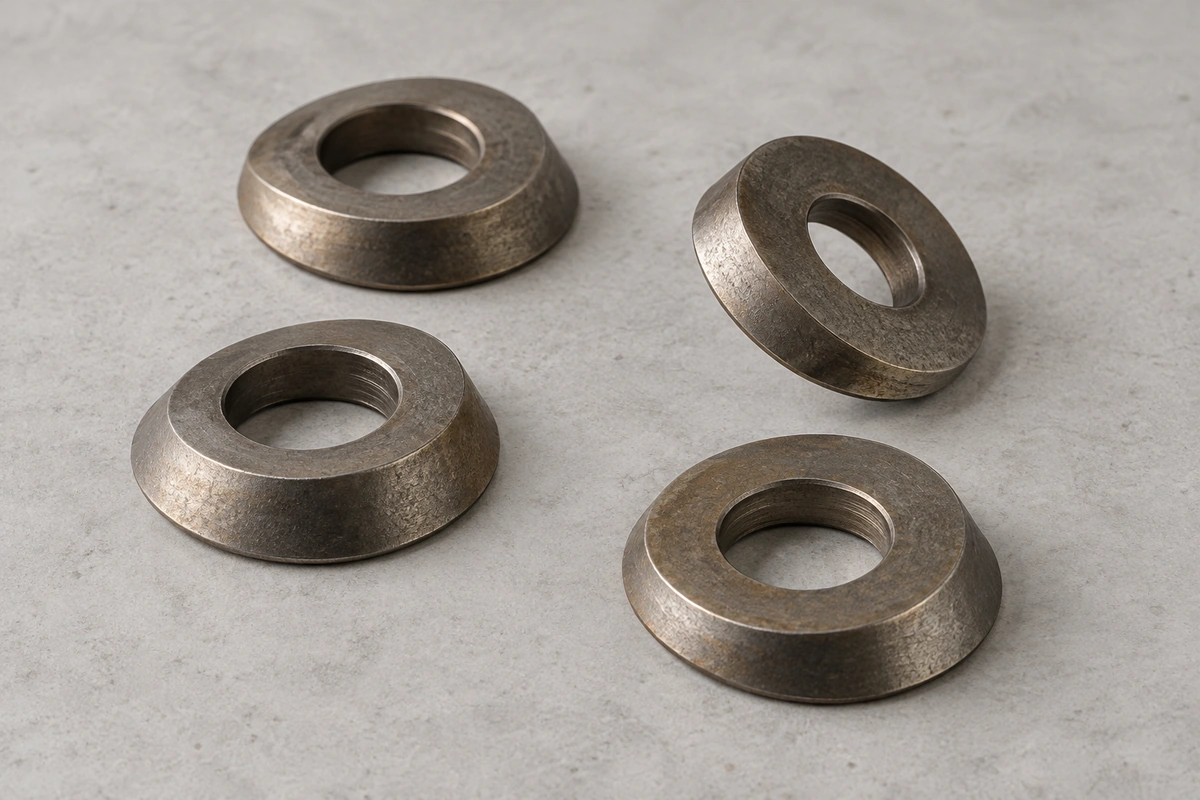
Two load washers can arrive in a quotation with the same nominal size and very different force figures. Before treating the larger number as better value, ask what each number means. A figure near the flattened condition, a calculated value and an unspecified seller claim do not automatically share a comparison basis.
This inquiry concerns the documented force convention of a load washer used in a bolted joint. It does not determine tightening torque, select a bolt or transfer a disc-spring operating-point requirement into a different component.
Preserve the manufacturer's explanation
SCHNORR's load-washer page references DIN 6796, October 1987 edition. It explains that load rises strongly near flattening and that its indicated load is twice the calculated value, with a stated comparison to measured values. This is the manufacturer's description of that product's reporting convention, not a universal conversion rule or evidence that the cited edition is the latest. SCHNORR load washers
The purchasing consequence is to keep the convention beside the number. Do not extract the number into a spreadsheet headed only “load” and discard the explanation. Nor should a buyer halve or double another supplier's value to make offers appear aligned without the relevant manufacturer's documented basis and technical review.
Recover the joint's specified washer
Use the approved assembly record to identify the washer designation, dimensional reference, material and surface variant. Record the document edition actually required by that record. If the record is old or incomplete, ask the responsible engineer which requirement governs this purchase instead of silently substituting the newest-looking catalogue page.
Keep a photograph of the current item as supporting identity evidence only. A dark surface cannot establish a particular treatment, and a visibly flattened removed washer is not a measurement of its original catalogue force. Any condition assessment belongs under the site's approved maintenance arrangements.
The quote should distinguish an exact specified item from a proposed alternative. The supplier's phrase “DIN washer” is too broad to settle the dimensional, surface and load-data fields. Ask it to name the product and the document supporting its response.
Request a like-for-like statement
For each offer, ask for the quoted force, units, definition, relevant displacement or condition, and whether it comes from calculation, catalogue reporting or measurement. If the supplier cites a standard, request the edition and the specific requirement it is claiming to meet. Do not turn that claim into independently verified conformity merely by transcribing it.
Then ask a more useful question than “which is stronger?”: can the technical reviewer compare these responses against the approved washer requirement? A missing definition is a request for clarification, not evidence of failure. An explicitly different definition is a reason to keep offers in separate comparison columns until resolved.
A fictional apparent two-to-one difference
Imagine an offer quoting a stated near-flattening convention and another quoting an unnamed calculated value. Their numbers differ by a factor of two. The similarity to a manufacturer's published explanation is not enough to prove that both suppliers used that explanation.
Return the second offer for its calculation basis and product-specific source. Return the first for the exact designation and applicable document if these are missing. Only after the reviewer establishes a common basis should the buyer compare the technical response and commercial terms. The example contains no recommended force or bolt condition.
Keep a force-convention record
| Record field | What the buyer should preserve |
|---|---|
| Washer designation | Exact offered product linked to the approved assembly record |
| Referenced edition | Standard or manufacturer document and edition actually claimed |
| Quoted force convention | Value, units, physical condition and calculated or measured basis |
| Surface variant | Required and offered surface descriptions with deviations visible |
| Application record | Joint or equipment reference defining the requested washer |
| Reviewer decision | Comparable, clarification needed or separately proposed change, with decision owner |
This record is most useful when a later purchaser can tell which definition was accepted without reopening an old email chain. Keep the supplier's original wording and the reviewer's conclusion as separate entries.
Write a bounded purchase request
Ask: “Please identify the exact load washer and surface variant offered against our assembly record. State the force definition, units, document edition and evidence basis. Explain any difference from our specified item. Do not interpret the requested washer as authority to change the joint or its tightening requirements.”
The machined-parts category and spare-parts inquiry provide the sourcing route. The buyer should name the bolted-joint technical approver before accepting a changed washer specification. A complete quote organizes that decision; it does not make it.
The inquiry image field accepts up to five PNG, JPEG, WebP or GIF files, no more than 10 MiB each and 20 MiB combined. A supported marketplace link, a short description or screenshots can start the request. It is not a PDF, CAD or ZIP upload field; arrange other technical files through a separately agreed, authorized exchange.
Should I choose the load washer with the highest listed force?
Not from that number alone. Establish the reporting convention and have the exact washer reviewed against the approved joint requirement.
Does a DIN 6796 reference prove the latest edition was used?
No. Retain the edition stated by the manufacturer or supplier and ask the technical owner which edition governs the purchase.
May I double a supplier value to compare it with SCHNORR data?
Do not apply a general conversion. Obtain the supplier’s own definition and supporting document, then ask the reviewer whether a valid comparison is possible.
Does the washer RFQ tell me the bolt tightening torque?
No. Washer data does not replace the approved bolted-joint specification or its competent technical review.
Sources
Discuss a sourcing request related to this article.Load-washer RFQ: compare the force convention first