
From worn spare to replacement drawing: define the handover
Compare sample measurement, observation-derived CAD and released replacement requirements before requesting manufacture or approving a spare-parts quote.
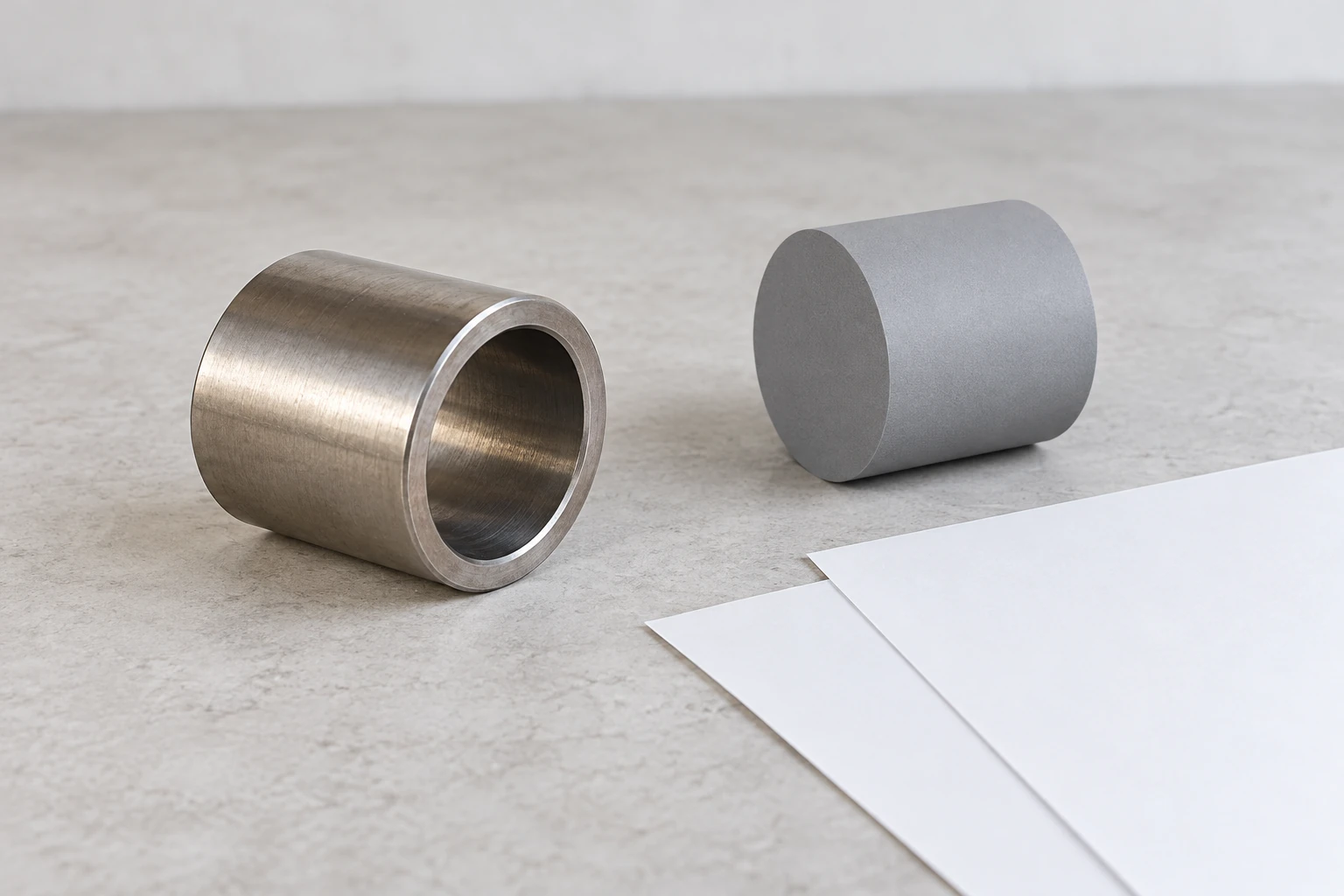
Measuring a worn spare does not by itself define the new replacement. Quote the sample record, measurement evidence, model and authorized replacement drawing as distinct deliverables, with unknown design decisions left visible.
Compare measurement-only and production-definition offers
A buyer with a stopped machine may receive a low scan or measurement quote before anyone has agreed who releases the replacement definition. Ask each provider to name its deliverable in ordinary language. A CAD file extension does not identify whether the file represents observed shape, interpreted geometry or an approved new part.
| Offer | Deliverable to request | Remaining commercial dependency |
|---|---|---|
| Measurement only | Identified sample, covered features and issued results | Who decides the replacement requirements? |
| Model from observations | Declared inputs, omissions and assumptions | Who reviews and releases its intended use? |
| Agreed replacement definition | Controlled drawing/model relationship and approval | What prototype or first-article evidence is required? |
Record whether sample transport, destructive work, model rights, extra measurement and a later revision are included. None should be assumed from the word reverse engineering. If the provider cannot answer a characteristic, preserve the gap and request a separate scope rather than filling the drawing from an apparently symmetrical surface.
The sample-based replacement guide explains what to gather before contacting suppliers. Once an authorized definition exists, use the machining RFQ guide to compare manufacture. The table is an original procurement comparison; no customer file, measured sample or recovered design is presented here.
This matters commercially when one quote covers measurement only and another covers an agreed design deliverable. Ask both providers to state their scope before comparing prices or calling the resulting files production-ready.
Keep traceability attached to results
NIST’s policy treats metrological traceability as a property of measurement results supported through documented calibration chains and uncertainty. It also states that traceability alone does not guarantee fitness for purpose. The result provider supports the claim; the user assesses it. NIST traceability policy
That does not make NIST the certifier of a supplier’s replacement design. Ask for the evidence supporting the specific reported results and let the responsible reviewer assess their adequacy for the intended decision. A statement that an instrument is traceable is not a substitute for understanding the reported quantity, uncertainty and context.
Separate three layers in the handover
The first layer identifies the sample and its known condition. Record whether it is the actual used item, an unused comparison sample or another reference, and preserve any unknown history. Do not label an observed surface as unworn without evidence.
The second layer contains the measurement report as issued, including feature references, units and stated uncertainty or limitations. Preserve the original report even if a clearer summary is prepared. If a feature was not covered, leave it unmeasured rather than inferring it from a symmetrical-looking area.
The third layer is the authorized design decision. It identifies which replacement requirements the technical owner has released, which assumptions need resolution and which evidence supports each decision. The coordinator must not copy every reported value into a nominal dimension field and call that an approved drawing.
A fictional worn-bushing file
Suppose a used bushing is measured and the supplier delivers a model labelled measured sample. A purchasing summary renames it new replacement and sends it for production. There is no decision explaining whether observed wear was retained, corrected or otherwise addressed in the design.
Restore the distinction. Keep the model as an observation-derived deliverable and ask the owner to define the replacement requirement and remaining verification scope. A precise measurement of the sample would still not answer the missing design-intent question. No wear allowance or nominal dimension is invented in this example.
If the owner releases a replacement drawing later, link its requirement decisions to the evidence and approval record. The measurement report remains useful in its own role; it has not become the approval itself.
Define the commercial deliverable
| Deliverable | Boundary to agree |
|---|---|
| Sample record | Identity, known condition and gaps in history |
| Measurement evidence | Features covered, report reference and interpretation limits |
| Observation-derived model | What it represents and what was inferred or omitted |
| Replacement definition | Released requirements and named design authority |
| Additional work | Unresolved characteristics, provider and agreed next scope |
Specify who must answer a design gap before manufacture. Also establish the authorized exchange and use of the supplied technical files; possession of a sample does not settle permission to reproduce protected designs. This article makes no legal determination. Its handover method keeps measurement, engineering and purchasing responsibilities visible without supplying a reconstruction procedure.
Send the bounded handover question
Use the machined-parts category and Spareparts sourcing request to describe the item and unresolved purchasing question. Independent aftermarket or unbranded buying coordination and supplier negotiation do not establish manufacturer affiliation, original-equipment supply, specialist technical capability or engineering approval.
AI-assisted editorial update, 26 October 2026. Sources and bilingual wording were checked with AI assistance; technical acceptance remains with the responsible provider.
Frequently asked questions
Is a precise scan a released manufacturing drawing?
No. It records its measured scope; replacement requirements and approval must be established separately.
Can an inquiry start without a complete drawing?
Yes. Identify the available sample and records, state unknowns and request a preliminary scope. Do not represent that preliminary quote as an accepted design.
Does traceability approve the replacement part?
No. Metrological traceability concerns measurement results and their supporting chain, not product approval or recovered design intent.
Sources
Discuss a sourcing request related to this article.From worn spare to replacement drawing: define the handover
Prepare a clearer buying request
Keep this page as context. Add what you know; review everything before sending. No purchase is made at this step.
Edit the checklist below before continuing. It stays a planning note; it does not approve a product or order.
- Sample record
- Measurement evidence
- Observation-derived model
- Replacement definition
- Additional work