
Coupling spider replacement RFQ: material and hardness
Identify the coupling family, spider code, material and hardness scale. Compare the specified element with separate substitute proposals before buying.
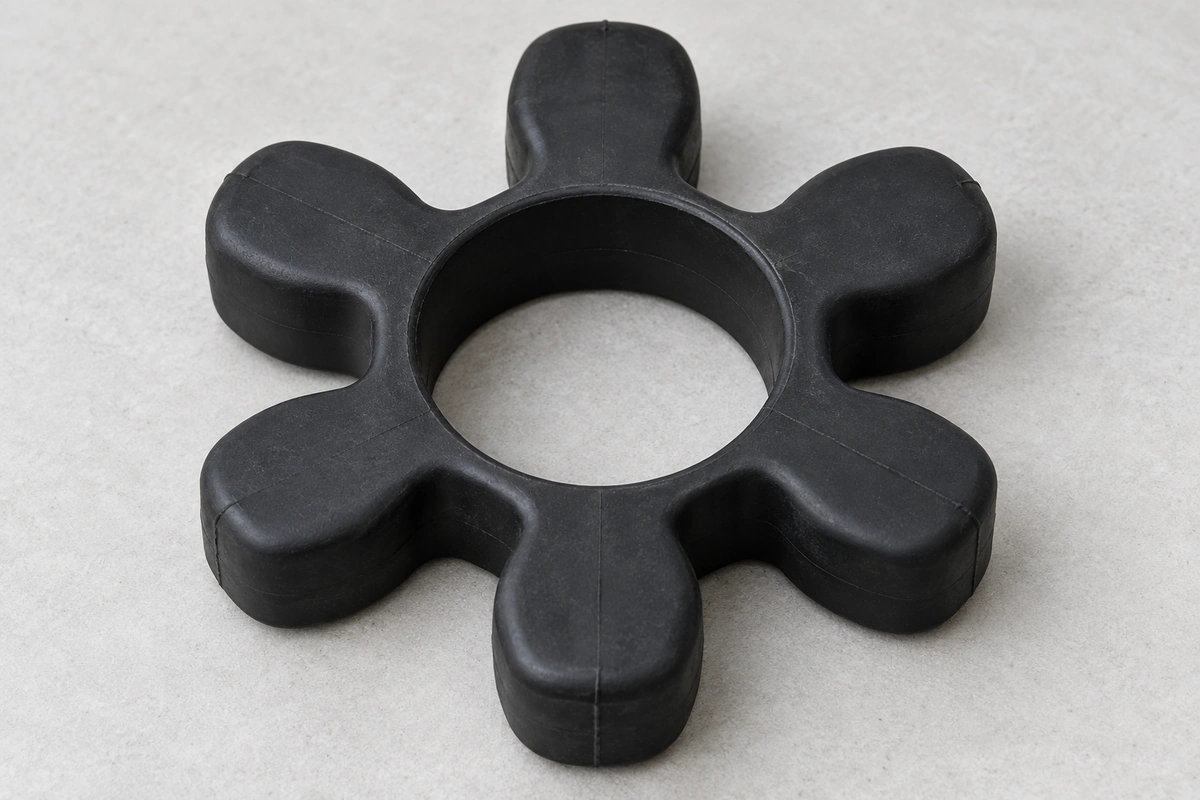
A coupling-spider replacement quote needs the approved coupling identity, exact element code, material and hardness scale. The expected color or a harder-is-better promise does not establish a suitable replacement.
Compare the same replacement unit before comparing price
An elastomer insert, a hub pair and a complete coupling kit are different purchases. Start with the authorized requirement, then ask the seller which of those units its price covers. A generic assembly photo should not become the packing schedule.
| Offer | Required identification | Question before ordering |
|---|---|---|
| Spider only | Coupling family/size and exact element variant | Is the quoted quantity counted as individual elements? |
| Complete coupling | Both hubs, element and included interfaces | Is complete-coupling supply actually required? |
| Different material or hardness | Separate candidate code and supporting manufacturer data | Who approves the changed variant for the application? |
Keep a changed element out of the specified-item price column until its technical review is resolved. If the seller cannot supply the original code, it can still return a preliminary alternative quote, clearly labelled conditional. This supports a buying decision without treating the agent’s supplier contact as engineering approval.
For repeat spares, retain the accepted designation with the invoice and request the offered item’s actual identification evidence. Preserve an unreadable marking as unreadable rather than guessing from an image. The supplier-check guide addresses source identity; the obsolete-part guide explains wider replacement routes. Neither substitutes for the coupling owner’s application decision.
A harder element is not automatically an upgrade. The buyer needs a documented replacement decision for the existing coupling, rather than a seller’s general promise of stronger rubber.
Hardness belongs to a defined product variant
KTR’s ROTEX Standard page describes spiders with different hardness levels and relates those options to damping and torsional stiffness. This establishes that hardness is a functional product distinction in that family, not merely a color or cosmetic option. It does not approve a particular hardness for the reader’s machine. KTR ROTEX Standard
Use the exact manufacturer’s documentation to decode any color or material code. Do not transfer one maker’s color scheme to another brand or to an unbranded part. A photograph can support identification but cannot establish the compound, hardness or authenticity of the offered element.
Record the hardness value together with its scale as stated in the specification. A bare number is incomplete; do not perform an informal cross-scale conversion to make a seller’s answer appear to match.
Identify the installed coupling before the loose insert
Collect the coupling maker, family, size and relevant hub or assembly references from approved records. Keep the spider designation linked to that coupling instead of ordering a standalone shape with an estimated diameter.
If the original element has degraded or changed shape, record it as as-found evidence rather than a new dimensional specification. Ask the technical owner to resolve any conflict between the removed item and the machine’s approved coupling record.
Clarify whether the requirement is one replacement spider, a defined spare kit or a complete coupling. A photo of two hubs and an insert does not establish what the quoted price includes. Do not accidentally reopen the whole coupling selection when the authorized scope is a documented element replacement.
Compare material and hardness together
Ask the supplier for the exact offered designation, manufacturer material description, hardness and scale, plus the document identifying that variant. Where a proprietary material name appears, preserve it instead of replacing it with the generic word polyurethane or rubber without justification.
A claimed hardness match is not the whole material comparison. If the supplier proposes a different compound or product family, retain that difference and request the relevant application evidence for review. The buyer should not infer damping, temperature behavior or service life from a hardness number alone.
Keep application questions with the machine or coupling specialist. If the current element failed, purchasing a replacement and investigating the cause are different tasks. A harder spider should not be proposed as an automatic remedy for an unresolved machine condition.
A fictional same-color substitution
A buyer requests the approved spider designation. Offer A shows an insert in the expected color but supplies no material or hardness document. Offer B provides an identified variant with a different hardness and calls it an upgrade.
Ask A for the exact designation and manufacturer-specific coding evidence. Treat B as a changed variant requiring technical review, not an improved version already approved by the word upgrade. The example makes no claim about real product color, hardness values or successful replacement.
Use a variant-control worksheet
| Record field | What the buyer should preserve |
|---|---|
| Coupling family and size | Approved coupling identity and relevant assembly or hub references |
| Spider designation | Exact required and offered element code, separate from a generic listing title |
| Material identity | Manufacturer’s documented compound or material variant, with differences preserved |
| Hardness and scale | Specified and offered value plus scale; no inferred conversion |
| Manufacturer coding source | Relevant product document defining any color or code for that family |
| Substitution approval | Decision on changed material or hardness, tied to the actual offered element |
The final order should name the approved element explicitly. If a seller later substitutes another color, material or hardness under the same listing title, reconcile the actual designation and evidence before accepting the change.
Request the specified element, with alternatives separate
“Please quote the spider identified for our documented coupling family and size. Confirm exact designation, material, hardness value and scale using the relevant manufacturer document. State the supplied quantity and whether hubs or other items are included. List any different compound or hardness as a separate proposal.”
The machined-parts sourcing category and spare-parts inquiry provide the purchasing route. Manufacturer examples here are documentation references, not an assertion that an independent buying service is affiliated with the brand or offers original-equipment goods. Coupling application and substitution approval remain with the responsible technical owner.
AI-assisted editorial update, 26 October 2026. Sources and bilingual wording were checked with AI assistance; technical acceptance remains with the responsible provider.
Frequently asked questions
Is a harder spider an automatic upgrade?
No. Hardness is part of a defined material/product variant; the application owner must assess a changed proposal.
Can another brand use the same color code?
Do not transfer a color meaning between manufacturers or product families. Use the exact maker’s documented code.
What if the original markings are unreadable?
State that limitation and supply available coupling/assembly records. Request a candidate identification scope instead of inventing a complete designation.
Sources
Discuss a sourcing request related to this article.Coupling spider replacement RFQ: material and hardness
Prepare a clearer buying request
Keep this page as context. Add what you know; review everything before sending. No purchase is made at this step.
Edit the checklist below before continuing. It stays a planning note; it does not approve a product or order.
- Coupling family and size
- Spider designation
- Material identity
- Hardness and scale
- Manufacturer coding source