
Rotary union receipt: reconcile the applicable drawing
Separate website illustrations, accepted order drawings and current model-specific information when resolving a rotary-union receipt discrepancy.
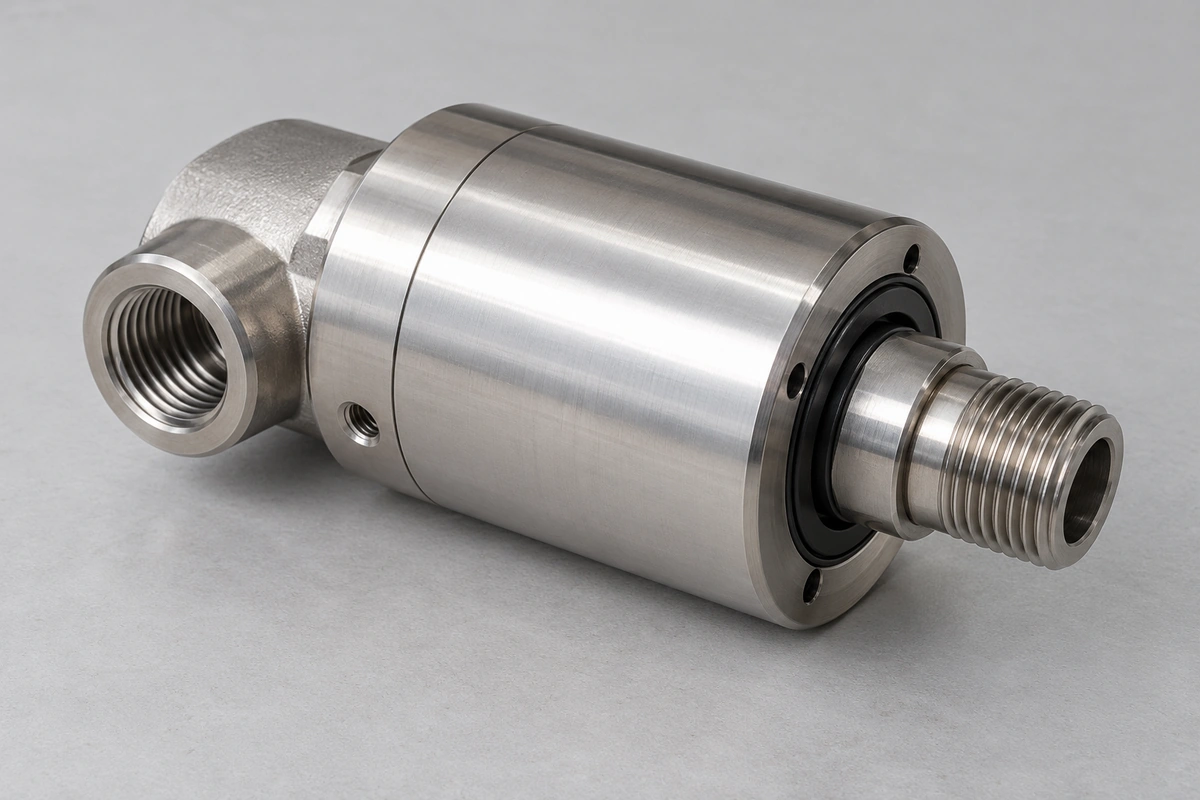
Resolve a rotary-union drawing discrepancy by identifying the received variant, the accepted order drawing and current model-specific information. A newer PDF or a different web illustration does not by itself amend the order or accept the goods.
Close the evidence question and the commercial outcome separately
A corrected document can explain a discrepancy without resolving every cost or delivery issue. Keep the technical applicability response, buyer acceptance and any replacement/rework proposal as separate records so the receiving decision remains traceable.
| Supplier response | Evidence follow-up | Commercial issue still to agree |
|---|---|---|
| Website image was another variant | Identify the correct drawing for the received item | Whether the agreed item was supplied |
| Delivered revision changed | Preserve change, applicability and authorized disposition | Accepted deviation, rework or replacement route |
| Drawing applicability still unclear | Request an attributable model-specific response | Hold the affected commitment and clarify timing |
Do not assign blame or a return entitlement from the worksheet alone. Ask the supplier to identify the original selling entity and relevant order terms before paying for an agreed return. A new drawing may be relevant evidence; it does not silently transfer freight, inspection or replacement costs to either party.
Keep medium/duty compatibility under its own review. A resolved port-layout question should not cause an unresolved passage requirement to disappear from the handover. The independent buying agent can organize correspondence and purchase records within the agreed service scope, while the responsible technical owner decides applicability and acceptance.
The receipt decision concerns which drawing applies to the delivered variant and how an apparent revision difference should be handled. It does not approve passage duties, interchangeability or installation.
Keep three references separate
Deublin’s resource library says its website drawings and data are reference material subject to change. For model-specific dimensional and operating data, it directs users to request the latest IC/DD drawing from its technical department. This supports a specific document-applicability question rather than measuring a web picture. Deublin resource library
Keep three entries: the reference image that prompted the concern, the drawing accepted for the purchase, and the current model-specific drawing or attributable manufacturer response. They may agree, but should not be treated as the same document without evidence.
For another maker’s unit, obtain that maker’s applicable document through its actual process. The Deublin example does not prove that an unknown union uses an IC/DD designation or that an independent sourcing service represents the brand.
Tie the revision to the delivered variant
Retain the complete supplied model and configuration reference, order line and accessible identification. Ask the supplier to explain which drawing issue applies to those goods. A family name or matching passage count does not establish the exact dimensional configuration.
Identify the reported port or connection by the controlled drawing reference. A cropped catalogue illustration may reverse orientation, omit a detail or cover a different option; do not decide which explanation is true without the relevant records. Preserve the original discrepancy image as the basis of the question, not as a scale drawing.
If the current manufacturer document differs from the order’s accepted issue, ask the technical owner and supplier to explain the change, applicability and disposition. “Latest” does not by itself amend a purchase contract or establish that a delivered change is acceptable. Conversely, an older order document should not prevent a relevant new limitation from reaching the responsible reviewer.
Drawing-applicability worksheet
| Field | What the record must distinguish |
|---|---|
| Received unit | Complete model/configuration and attributable receipt reference |
| Concern reference | Online image or other document that triggered the discrepancy |
| Order baseline | Accepted model drawing, issue and relevant port feature |
| Current information | Latest model-specific document or manufacturer response and its scope |
| Difference | Exact revision/variant question, without inferred interchangeability |
| Authorized outcome | Applicable drawing and decision on any delivered departure |
The worksheet does not duplicate a fluid-channel map. A complete medium and duty response can coexist with an unresolved geometric revision, and a reconciled drawing does not answer the medium and duty requirements.
A fictional rotated-port concern
A fictional receiving coordinator compares a unit with a saved website illustration and reports a port-position difference. The supplier sends a newer model drawing but does not identify whether it applies to the delivered configuration or the accepted order.
Ask for that applicability connection and preserve both issues. If the response establishes that the web illustration concerned another variant, record the corrected comparison basis and have the actual received evidence reviewed against the proper requirement. Do not declare a dimensional pass merely because the first comparison was invalid.
If the supplier confirms a delivered revision change, keep it as a deviation for the named technical and purchasing owners. A revised PDF alone is not acceptance. Close the drawing question with the exact variant, issue and authorized outcome, while leaving fluid duty and installation prerequisites under their separate reviews.
Prepare a bounded supplier question
Use the Machined parts category and Spareparts sourcing request to identify the item and the unresolved question. Independent aftermarket or unbranded buying coordination does not establish manufacturer affiliation, original-equipment supply, inspection availability or technical approval. The manufacturer references above explain documentation; the fictional example is not a customer case.
AI-assisted editorial update, 26 October 2026. Sources and bilingual wording were checked with AI assistance; technical acceptance remains with the responsible provider.
Related purchasing decisions: Machinery-spare sourcing.
Frequently asked questions
Does the latest drawing automatically replace the order issue?
No. Establish applicability and obtain the authorized decision on any difference; do not silently amend the accepted baseline.
Does an incorrect website comparison prove the delivered part passed?
No. It corrects the comparison basis; the actual received evidence must still be reviewed against the applicable requirement.
Does a resolved drawing settle fluid duty and installation?
No. Those requirements retain their separate technical reviews.
Sources
Discuss a sourcing request related to this article.Rotary union receipt: reconcile the applicable drawing
Prepare a clearer buying request
Keep this page as context. Add what you know; review everything before sending. No purchase is made at this step.
Edit the checklist below before continuing. It stays a planning note; it does not approve a product or order.
- Received unit
- Concern reference
- Order baseline
- Current information
- Difference