
Torque-limiter replacement RFQ: preserve overload behavior
Compare the specified torque limiter with successor or alternative offers by operating principle and interfaces, without prescribing settings or safety approval.
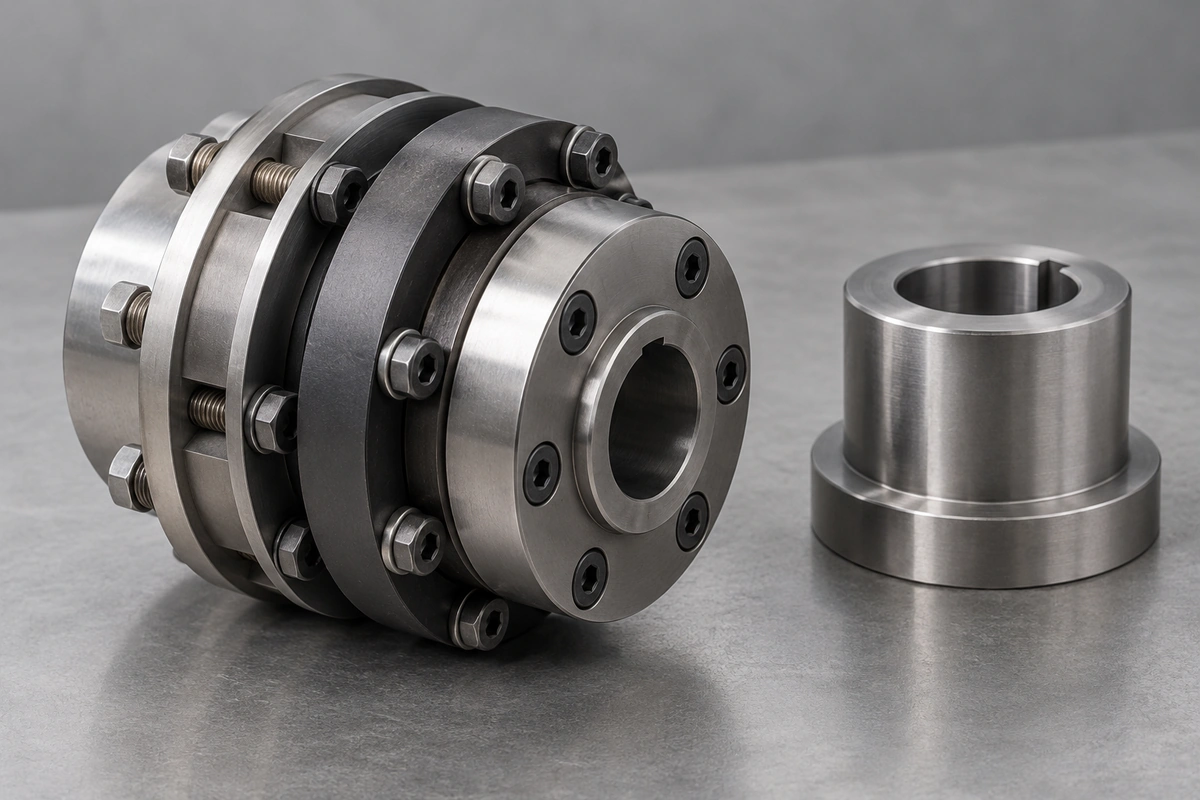
A torque-limiter replacement must preserve the machine’s required overload behavior as well as its interfaces. Matching bore size and an overlapping advertised torque range do not establish equivalence.
Compare specified, successor and alternative offers separately
An OEM-conversion quote can be commercially useful without yet being an approved machine change. Keep the seller’s price proposal and the machine owner’s technical decision in different fields, especially when a proposed successor changes how overload is handled.
| Supply route | Evidence to ask for | Quote dependency |
|---|---|---|
| Specified model | Exact model, variant and source identity | Current availability and delivered scope |
| Documented successor | Manufacturer relationship and changed characteristics | Approval of applicability to this machine |
| Different product or principle | Exact behavior/interface comparison | Separately defined integration review |
Ask whether any required event-detection hardware, documentation or professional work is included. A lower bare-component price is not a complete comparison if another proposal includes a different scope. Do not import a competitor’s advertised saving percentage into the buyer’s calculation.
If the responsible reviewer rejects an alternative, retain the reason and return to the specified-item or other authorized route. If the reviewer approves a defined candidate, keep the approval linked to the exact variant in the final quotation; a later supplier substitution reopens the identity question. This comparison does not give a trip setting, reset sequence or machinery-safety determination.
The central question is what the approved design requires the device to do during and after an overload, and which exact model documentation supports that behavior. This is not a guide to adjusting a trip setting or defeating an overload function.
Identify the principle in the manufacturer’s terms
KTR distinguishes frictionally engaged, load-holding torque limiters from positive-locking, load-separating ball-engagement systems. The named groups illustrate different operating principles, not interchangeable choices or a universal recommendation. KTR torque limiters and overload couplings
Ask the supplier to state the offered model’s principle in its own documentation and map it to the approved machine requirement. Avoid relying on a marketplace title such as “safety coupling,” which may be used broadly without identifying the behavior of the actual variant.
A product-family explanation does not supply every model’s overload response, reset or re-engagement behavior. Those details remain questions for exact model documentation and the machine’s responsible reviewer.
Recover the machine’s behavior requirement
Collect the current limiter identity, machine revision and the record defining its role. Identify whether the purchase seeks the specified spare, an approved successor or a different operating principle. Keep a prior undocumented replacement distinct from the released machine design.
Ask the technical owner which behavior and interface requirements must be answered. These may include the documented overload response, how the machine detects the event and the conditions governing return to service. Record references and responsible parties rather than supplying an operating sequence in the RFQ.
Do not reconstruct the required setting from a motor label or from the markings on an uncertain old unit. If the setting or acceptance basis is missing, leave it open for the machine owner and relevant manufacturer. A sourcing article cannot determine the correct protection strategy.
Separate dimensional correspondence from behavior
Request the candidate’s drawing and connection details, but keep them in a different part of the comparison from its operating principle. A geometry match is useful evidence for one interface question; it does not settle what happens at overload.
Similarly, keep the meaning and conditions of torque figures visible. A setting range, rated transmission value and another limit should not be placed in one unlabeled column. Have the technical reviewer identify which figures answer the actual requirement for the exact model.
If an alternative changes event detection, integration or return-to-service behavior, list that as a machine-system change. The parts quotation should not imply that existing control logic, guarding or procedures remain acceptable without review.
A fictional same-size alternative
A machine record specifies a load-separating design. A supplier offers a same-bore frictional load-holding unit and calls it an equivalent because its advertised torque range overlaps. The offer has not preserved the stated operating principle.
Ask for the specified design or a clearly separate alternative proposal with its exact behavior documentation. Refer the alternative to the responsible machine reviewer. Do not approve it by selecting a number inside the overlapping ranges. This fictional example includes no setting, stopping distance or safety-performance claim.
Use an operating-principle worksheet
| Record field | What the buyer should preserve |
|---|---|
| Existing limiter identity | Exact model, machine revision and current approved replacement record |
| Operating principle | Required and offered principle as defined in manufacturer documentation |
| Required behavior record | Overload response and relevant machine-interface references from the technical owner |
| Exact product evidence | Model-specific behavior, drawing and rating definitions with limits retained |
| Proposed change | Any principle, detection or return-to-service difference requiring separate review |
| Machine approver | Responsible machine owner or specialist and disposition of unresolved decisions |
Keep the review conclusion tied to the quoted model and revision. If the seller changes the variant after price negotiation, the prior behavior comparison may no longer apply and should be revisited.
Write the inquiry without prescribing a setting
“Please quote the documented limiter model or identify your proposed successor. State its overload operating principle and provide the model-specific behavior and interface documents required by our machine record. List changes in principle, event detection or return-to-service requirements separately. Leave unresolved setting and integration decisions for our technical approver.”
Use the machined-parts category and spare-parts inquiry for the commercial request. The term safety coupling in a manufacturer’s range does not establish a safety function or machine approval for the reader’s application. Engineering and any required machinery-safety assessment need their own defined scope.
AI-assisted editorial update, 26 October 2026. Sources and bilingual wording were checked with AI assistance; technical acceptance remains with the responsible provider.
Related purchasing decisions: Obsolete-part choices.
Frequently asked questions
Does an overlapping torque range prove equivalence?
No. Preserve the meaning of the ratings, operating principle and machine behavior requirements.
Is a successor automatically approved?
No. Ask for the documented relationship and changes, then obtain the machine owner’s applicability decision.
Can the RFQ prescribe a setting from a motor label?
No. Unresolved settings and protection strategy belong with the machine owner and appropriate manufacturer or technical provider.
Sources
Discuss a sourcing request related to this article.Torque-limiter replacement RFQ: preserve overload behavior
Prepare a clearer buying request
Keep this page as context. Add what you know; review everything before sending. No purchase is made at this step.
Edit the checklist below before continuing. It stays a planning note; it does not approve a product or order.
- Existing limiter identity
- Operating principle
- Required behavior record
- Exact product evidence
- Proposed change