
Slip-ring RFQ: separate power, signal and control requirements
Map each slip-ring circuit to its documented function and exact interface requirement instead of treating circuit count as proof of compatibility.
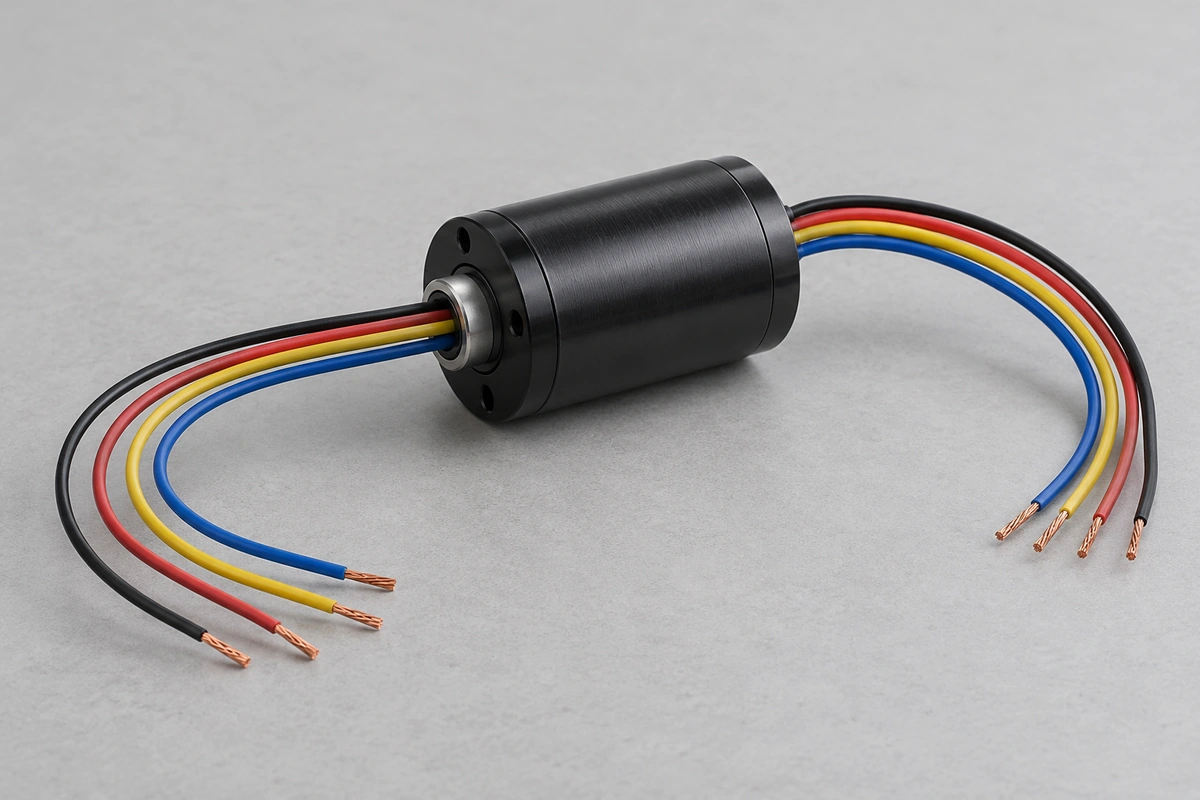
A slip-ring listing with the required number of circuits may still leave the actual electrical functions unanswered. The RFQ should distinguish power, data and control requirements and ask for evidence for each on the exact proposed model.
The buyer is assembling a requirements map for a qualified electrical reviewer. This is not a wiring schedule, a continuity-test procedure or permission to adapt a connector because its shell looks familiar.
Separate electrical transfer from fluid transfer
Deublin's slip-ring page describes electrical transfer and identifies integrated slip-ring and rotary-union solutions. This distinguishes electrical requirements from media-transfer requirements even when both functions are packaged together. It does not establish universal protocol compatibility or an electrical approval for an unnamed model. Deublin slip rings
If the replacement combines these functions, maintain two linked records: the electrical circuit requirements and the fluid-passage requirements. A complete fluid map cannot confirm a data interface, and an electrical circuit count cannot establish the media scope.
Ask the supplier for the exact assembly identifier and configuration. A family name may cover different circuits, connections and integrated options. Keep a quoted variant tied to its own technical documents throughout the inquiry.
Start from the approved interface record
Use the equipment's released electrical documentation to identify circuit functions. Preserve its labels and references rather than inventing new terminal names. Ask the qualified electrical owner which ratings, signal definitions, protocols, shielding or other interface characteristics must be documented for the intended replacement.
Where a requirement is missing, mark it as unresolved. Do not infer a signal type from wire color, connector appearance or a seller's generic claim that the product transmits data. Nor should a purchaser determine allowable current from a lead's apparent size.
Record the distinction between the existing documented arrangement and later modifications. If the machine's actual configuration is uncertain, request qualified investigation through the appropriate site process. Gathering a quote does not authorize opening energized equipment or conducting an operating test.
Ask for a circuit-by-circuit response
For each required function, request the proposed circuit or interface reference and the document supporting it. A supplier may group several identical circuits, but the response must clearly show which requirements that group covers and which it does not.
Keep headline ratings attached to their conditions. Do not multiply one advertised per-circuit value by the total circuit count to assert an assembly capability without the manufacturer's documented basis. Ask the reviewer to assess the exact operating combination and any limitations the supplier identifies.
For a specified communications interface, request model-specific evidence addressing the actual requirement. The phrase “supports signals” does not answer an identified protocol or performance requirement. A data function should remain open until its documentation is adequate for the responsible review.
A fictional circuit-count match with a data gap
An approved machine record distinguishes power circuits from a named data interface. Offer A matches the total circuit count but provides only a power-rating summary. Offer B identifies power and signal options but does not tie the required data interface to the quoted configuration.
Ask A for a function-specific response, and B for exact-variant documentation. Do not label either offer electrically compatible on the basis of count alone. This example contains no current, voltage, pin assignment or wiring instruction.
If a supplier proposes a different interface or external adaptation, keep that as a changed integration scope for the electrical owner. A replacement-parts request has not approved a redesign.
Use a circuit-function worksheet
| Record field | What the buyer should preserve |
|---|---|
| Circuit identifier | Reference from the approved equipment documentation, preserving circuit grouping |
| Power or signal function | Documented power, data or control purpose for each required circuit |
| Required interface record | Ratings and specific interface requirements supplied by the electrical owner |
| Exact model evidence | Offered configuration, supporting document and unanswered functions |
| Integrated fluid scope | Separate passage map and assembly boundary if fluid transfer is included |
| Electrical reviewer | Qualified owner and disposition of each unresolved interface or deviation |
Repeat the circuit entries as needed from the approved record. Keep the supplier's claim, supporting document and review decision separate so a complete response cannot be mistaken for accepted evidence.
Carry the function map into the quote
“Please identify the exact slip-ring configuration and map its documented circuits to the power, signal and control functions in our approved record. Provide model-specific evidence for the required interfaces and operating combination. Separate any integrated fluid-transfer scope and list deviations or missing inputs.”
Use the machined-parts sourcing category and spare-parts inquiry to organize the request. Electrical suitability, protective measures, installation and commissioning remain the responsibility of the qualified technical owner. A procurement worksheet cannot certify them.
The inquiry image field accepts up to five PNG, JPEG, WebP or GIF files, no more than 10 MiB each and 20 MiB combined. A supported marketplace link, a short description or screenshots can start the request. It is not a PDF, CAD or ZIP upload field; arrange other technical files through a separately agreed, authorized exchange.
Is the correct number of circuits enough to select a slip ring?
No. Each circuit group must answer the documented power, data or control function and the exact model’s applicable limits.
Does a general signal-transfer claim prove protocol compatibility?
No. Request evidence for the required interface on the quoted configuration and have the qualified electrical owner assess it.
Can a matching connector shell establish the wiring?
No. Use the released interface documentation and competent review. This RFQ provides no pin assignments or wiring procedure.
How should an integrated rotary union be quoted?
Identify the complete assembly while keeping electrical circuits and fluid passages in separate linked requirements maps. Both scopes need their own review.
Sources
Discuss a sourcing request related to this article.Slip-ring RFQ: separate power, signal and control requirements