
Seal receipt: identify unexplained fluid contact
Resolve what fluid contacted a received seal and whether the actual compound and exposure have been assessed before accepting a protective-oil explanation.
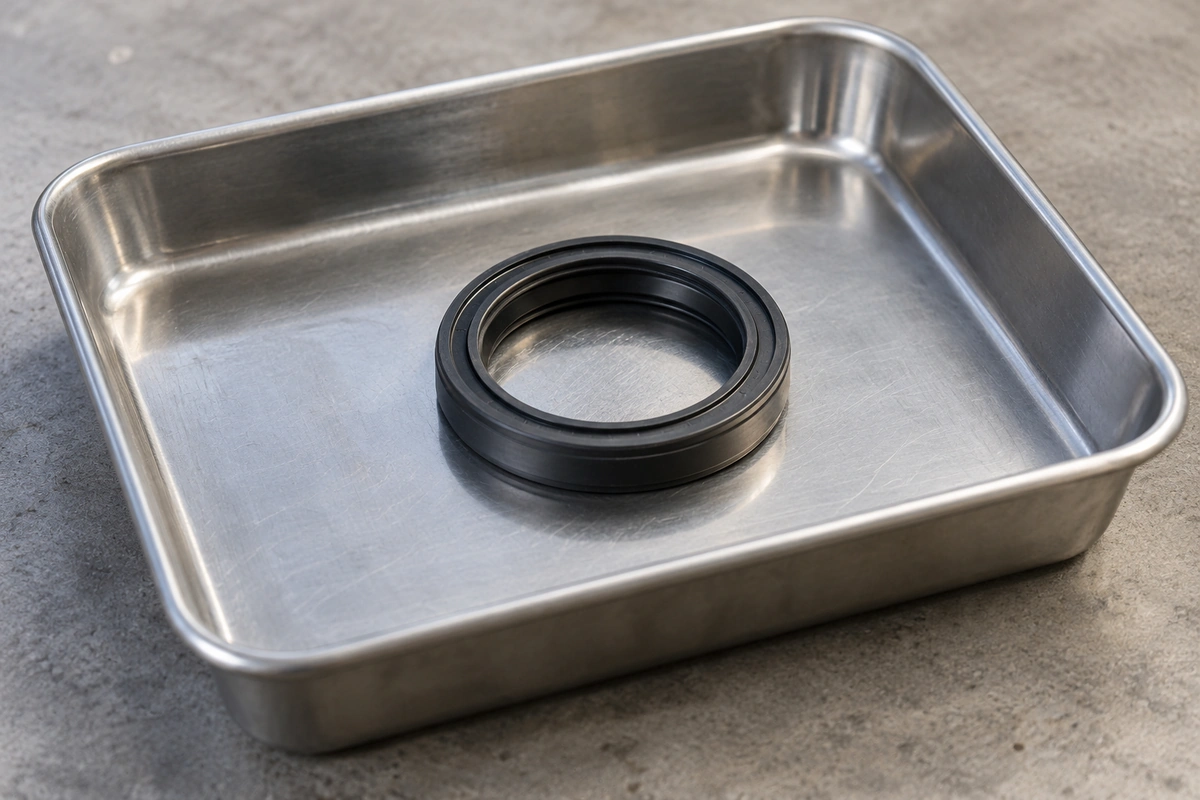
An oily film on a received seal is not automatically a protective treatment. Before accepting that explanation, identify the fluid, the seal material and the circumstances of contact. A declaration that the seal is the correct compound answers only one part of the exposure question.
This article concerns an unexplained fluid on the delivered component. It does not recommend cleaning, lubrication, fluid mixing or a compatibility test.
Connect the substance to the seal
Hallite’s storage guidance warns against contact with liquids and semi-solids such as oils or greases unless the manufacturer packed the items that way. Its compatibility information distinguishes materials, fluid categories and service conditions. Together these sources support asking about the actual substance and product rather than treating every oil as benign. Hallite seal storage and Hallite fluid compatibility
Keep the received seal’s exact designation and available compound declaration. A broad word such as “rubber” may not resolve the required identity. Then ask for the fluid’s manufacturer and product designation, who applied it, its stated purpose and the record connecting it to these seals.
If the supplier says the film came from nearby goods or repacking, preserve that as its explanation rather than relabelling the fluid as factory protection. A cartridge photograph can identify a pictured product without establishing which substance contacted the seal.
Make the history part of the question
Request known contact dates or periods, packaging state and any reported additional substances. Leave unknowns explicit. Do not infer exposure duration from an invoice or deduce fluid chemistry from color, smell or a photograph.
An identified fluid is not yet an accepted exposure. Ask the manufacturer or responsible qualified provider to assess the specific material, substance and relevant conditions. A general compatibility table may help frame the inquiry, but cannot supply omitted compound details or reconstruct the actual history.
Keep subsequent handling in the record. If the seal has already been wiped or treated, preserve available earlier evidence and the provider’s account of what changed. A clean-looking final image cannot establish the identity or consequence of the earlier film.
Seal-contact worksheet
| Field | Specific question |
|---|---|
| Seal reference | Which material/compound declaration applies to the received items? |
| Substance identity | What exact product is claimed, and is its connection to this contact documented? |
| Application history | Manufacturer packing, later seller treatment or unexplained transfer? |
| Conditions known | Contact period, package state and other reported substances |
| Compatibility response | Which exact material and fluid combination was assessed? |
| Decision and limits | What remains unknown, and which items does the disposition cover? |
The worksheet does not ask a purchasing coordinator to choose a solvent or interpret a laboratory result without appropriate responsibility.
A fictional protective-grease claim
A fictional bag of identified seals arrives with a visible film. The seller calls it protective grease and supplies the seal material declaration, but cannot name the grease. The material record advances seal identity; it does not establish what contacted the parts.
Ask for the packaging or treatment record and the substance identity. If the seller later provides a named product, send the specific combination and known history for review. Do not copy a table entry for a broad grease category into a received-seal acceptance field.
If identity remains unknown, retain an unknown-contact status and request a defined next step from the responsible provider. Replacing the seals or commissioning an assessment requires its own agreed scope. Neither wiping the film away nor ordering more of the presumed grease resolves the original exposure.
Prepare a bounded supplier question
Use the Seals and gaskets category and Spareparts sourcing request to identify the item and the unresolved question. Independent aftermarket or unbranded buying coordination does not establish manufacturer affiliation, original-equipment supply, inspection availability or technical approval. The manufacturer references above explain documentation; the fictional example is not a customer case.
The form supports a supported-marketplace HTTPS link, an 8–1200-character description, or screenshots. It accepts up to five PNG, JPEG, WebP or GIF images, at most 10 MiB each and 20 MiB combined. It does not accept PDF, CAD or ZIP uploads. Arrange other authorized technical files only through a separately agreed exchange.
Is any oil on a seal protective?
No such conclusion follows. Identify the substance, who applied it and the applicable manufacturer guidance for the actual seal material.
Does a correct seal compound declaration settle the film question?
No. It identifies one side of the combination. The contacting substance and relevant history still require a supported assessment.
Can a general compatibility table approve the received seals?
It cannot fill missing identity or history. Obtain a response covering the specific product combination and conditions from the responsible qualified provider.
Should receiving clean the film before resolving it?
This article gives no cleaning instructions. Preserve available evidence and seek exact-product guidance before treatment changes the condition under review.
Sources
Discuss a sourcing request related to this article.Seal receipt: identify unexplained fluid contact