
Seal gland receipt: resolve an entry-edge concern
Locate a reported burr on the seal’s documented assembly path and reconcile gland readiness without treating a dimensional pass as edge acceptance.
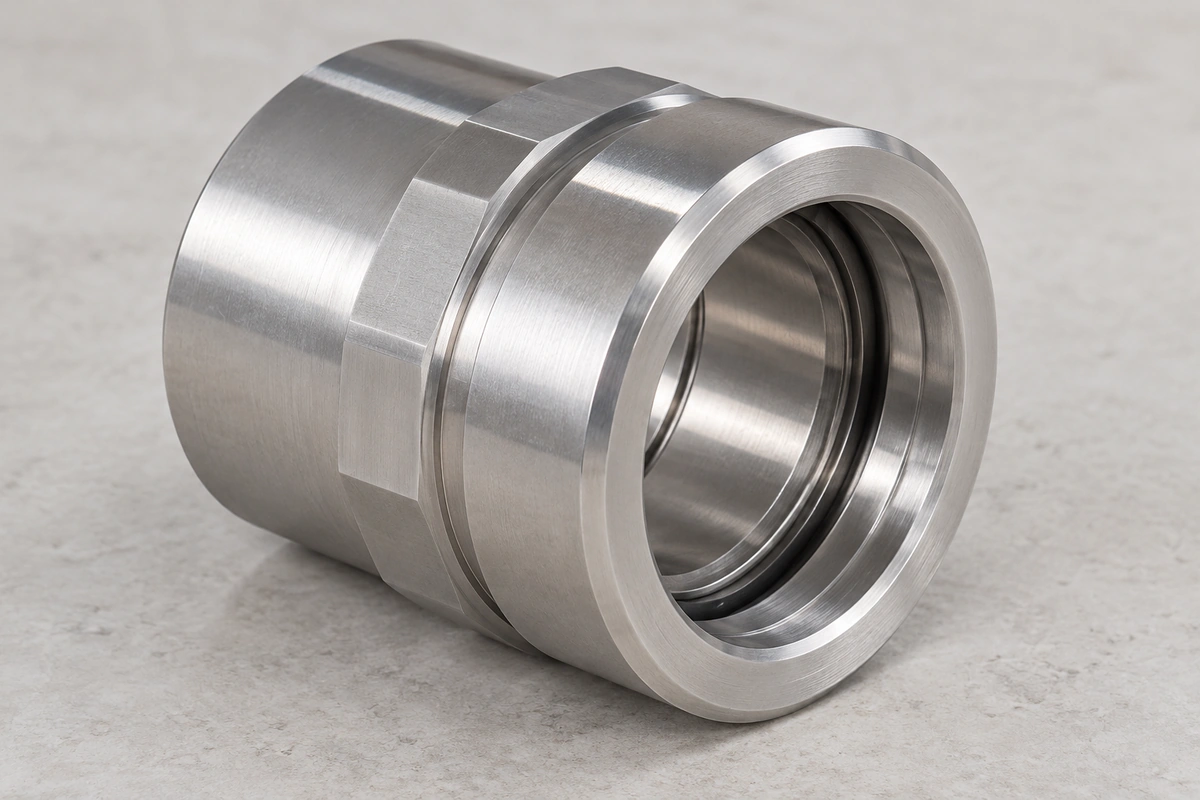
A seal gland can have the specified main dimensions while leaving a concern at an edge the seal must pass during assembly. When a receiving record reports a burr or sharp feature, identify that location and its relationship to the approved assembly path. A general dimensional pass does not answer the edge-readiness question.
The decision is whether the agreed gland condition has been established before sealing assembly proceeds. This article provides no deburring technique, installation sequence, allowable burr size or touch test.
Locate the feature in the seal passage
Hallite’s fitting guidance specifically calls attention to housing damage, sharp edges and burrs at ports, grooves and threads over or through which a seal passes. The mechanism is different from a cosmetic concern on an unrelated outside surface: the relevant edge lies on the seal’s passage during assembly. Hallite use and fitting guidance, item 3
Use the approved assembly or housing drawing to identify the reported feature. Ask the responsible technical owner to confirm its role rather than inferring the path from a loose seal photograph. An edge next to a port and an edge the seal must cross can require different assessment questions.
Keep observations neutral where the feature is not yet assessed. Preserve the report’s terminology and original image. If the report says “possible burr,” do not upgrade that to a confirmed cutting hazard or downgrade it to harmless machining appearance.
Check the readiness requirement actually purchased
Recover the drawing’s edge and housing-condition notes and the accepted supply scope. Was the gland supplied finished for the defined assembly operation, or was further controlled work explicitly excluded? Distinguish missing evidence of included work from a new request for additional preparation.
Ask the supplier to address the particular feature and note. A bore-diameter result, a thread gauge record or a general cleanliness statement may answer a different requirement. Retain them under their own headings rather than rejecting useful records or allowing them to close the edge concern.
If the supplier proposes local removal, polishing or a different assembly aid, keep that as a proposed technical change. A purchasing coordinator should not choose the tool, edge profile or method. Any work must have an authorized scope and responsible provider, with subsequent evidence defined before the concern is closed.
Gland-readiness worksheet
| Field | What makes the question specific |
|---|---|
| Gland reference | Part, revision, received unit or lot and assembly identity |
| Entry feature | Named port, groove, thread or other edge in the governing drawing |
| Seal passage | Technical owner’s confirmed relationship to the approved assembly path |
| Required condition | Actual edge/readiness note and agreed supply boundary |
| Reported concern | Original observation and evidence location, with uncertainty preserved |
| Authorized response | Assessment, approved remedy if any, and defined completion evidence |
This worksheet organizes the question before assembly. It does not create a new physical inspection obligation merely because a feature is visible.
A fictional diameter pass with an open edge
A fictional gland report confirms the main bore dimension and separately records a possible burr at the documented seal entry. The supplier sends the same dimensional report again as proof that the gland passed.
Acknowledge the dimension result while requesting an answer to the edge note. The unresolved issue is not another diameter measurement; it is the stated entry condition and its acceptance basis. If the technical owner determines the feature is outside the seal passage, record that narrower finding and still address any applicable drawing requirement.
Where a remedy is agreed, preserve the original condition and the exact scope completed. An after-work photograph may support the record but should not become a universal guarantee that the assembled seal will perform. Keep installation and system acceptance under their competent technical owners.
Prepare a bounded supplier question
Use the Seals and gaskets category and Spareparts sourcing request to identify the item and the unresolved question. Independent aftermarket or unbranded buying coordination does not establish manufacturer affiliation, original-equipment supply, inspection availability or technical approval. The manufacturer references above explain documentation; the fictional example is not a customer case.
The form supports a supported-marketplace HTTPS link, an 8–1200-character description, or screenshots. It accepts up to five PNG, JPEG, WebP or GIF images, at most 10 MiB each and 20 MiB combined. It does not accept PDF, CAD or ZIP uploads. Arrange other authorized technical files only through a separately agreed exchange.
Does a correct gland bore dimension prove the entry edge is acceptable?
No. The dimensional result and specified edge condition answer different requirements. Request the evidence addressing the relevant entry feature.
Why does the seal’s assembly path matter?
It identifies whether the reported feature is one the seal must pass. Use the approved assembly record and technical owner’s confirmation rather than guessing from appearance.
Can receiving deburr the gland immediately?
This article grants no such authorization. A proposed material-altering remedy needs competent review, an agreed scope and appropriate completion evidence.
Does an entry-edge decision approve the complete seal assembly?
No. It is a bounded housing-readiness decision. Seal identity, installation, operating conditions and system acceptance remain separate responsibilities.
Sources
Discuss a sourcing request related to this article.Seal gland receipt: resolve an entry-edge concern